Updated on February 24, 2026
How Far Back Should a Resume Go? Tips & Examples for 2026
Are you wondering how far back a resume should go? Read our article to find out everything you need to know!


Novoresume got people hired at
























You’ve been building your career for years, maybe even decades.
But now you’re updating your resume, and you’re staring at the screen, wondering: how much of this should you actually include?
Does every job you’ve ever had go into your resume, or is it better to leave some “ancient” roles out?
It’s a common question for job seekers at any level, and we’re here to answer it.
In this article, we’re going to cover:
- How Far Back Should a Resume Go?
- How Long Should a Resume Be?
- How Many Jobs Should You List on a Resume?
- 9 Tips to Keep Your Work Experience Relevant
…and more!
Let’s dive in.
Want to make a resume that only includes all the right information and impresses the hiring manager? Use our professional resume builder to create your resume in minutes!
Choose a resume template to get started.
How Far Should a Resume Go?
There’s a debate about whether your resume should include your entire career history or just the recent work experience.
The general rule of thumb is that your resume should go back 10–15 years. That’s usually enough to cover your most relevant and impactful roles without overwhelming the hiring manager with information.
But why 10–15 years? Some candidates are concerned that skipping roles can make them look like job-hoppers.
Most hiring managers are interested in your recent work experience above all else. The skills and achievements you’ve gained in the past decade are the ones most likely to reflect your current abilities.
Older jobs could show you’ve been in the workforce for a long time, but they don’t necessarily demonstrate the qualifications employers are looking for today. When the hiring manager initially skims your resume, if they don’t see any recent, relevant work experience, they might stop reading altogether.
That said, the 10–15 year rule isn’t a hard cutoff. The determining factor is actually relevancy.
If you had a role more than 15 years ago that directly connects to the job you’re applying for now, it may be worth keeping on your resume. For example, if you’re applying for a senior management position and you held a director role 18 years ago, that’s still valuable evidence of your leadership track record.
But if you worked in an unrelated industry decades ago, it’s better to skip it so you can dedicate more space to experiences that matter for your current career path.
How Long Should a Resume Be?
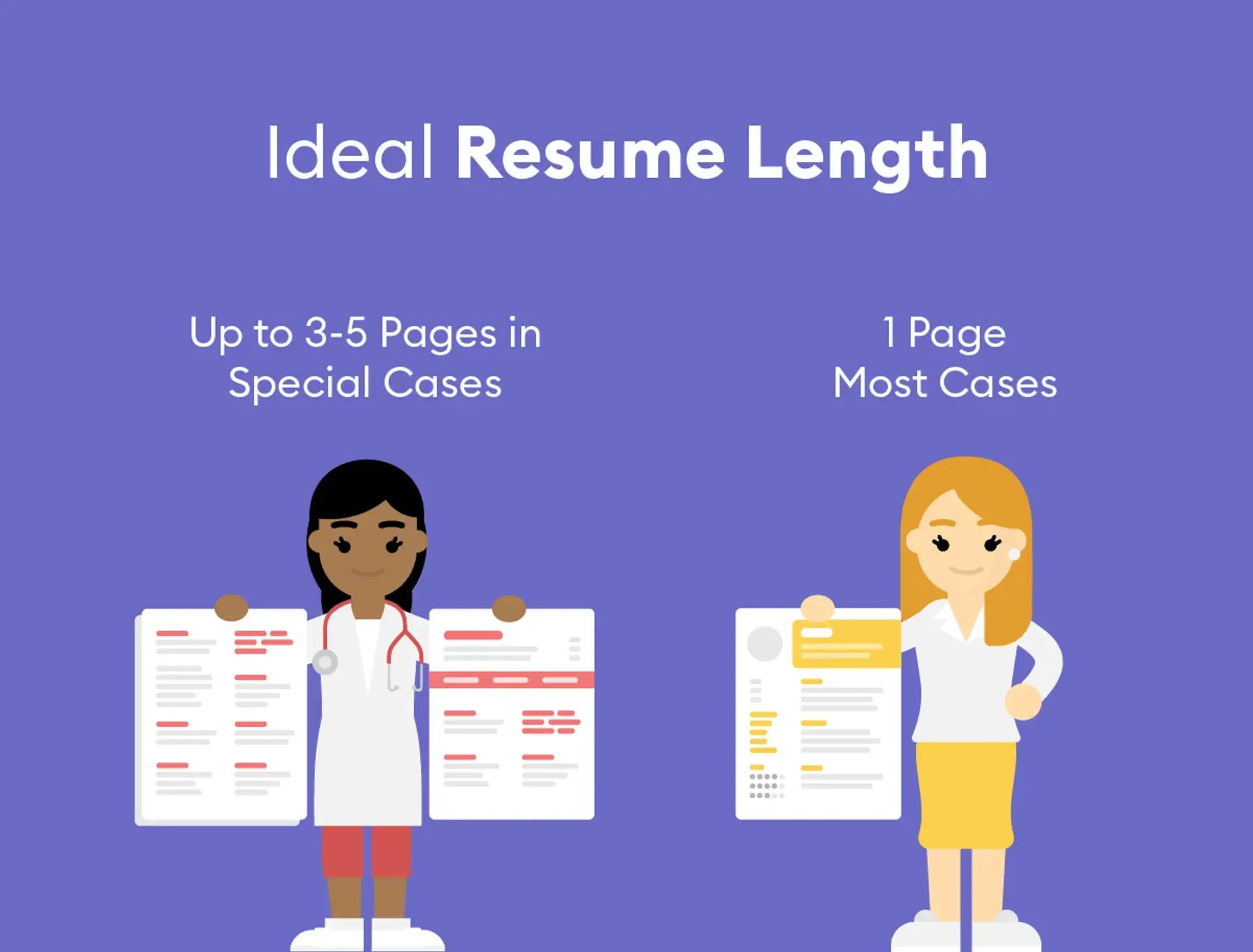
In most cases, your resume should be one page long.
Unless you’ve got more than 10–15 years of work experience or you’re applying for a senior leadership or government position, you don’t need to exceed a single page.
Your resume is not a biography. It’s a marketing document that’s designed to highlight the skills and accomplishments that make you the best fit for the role.
Hiring managers typically spend less than six seconds skimming your resume at first. A concise one-page resume makes it easier for them to spot your strongest qualifications. Adding more pages only helps if the information is highly relevant and adds real value, such as when you’re applying for an executive role or getting into academia.
Years of Experience by Career Level
Now that we’ve covered how far back your resume should go in general, let’s look at how it changes depending on where you are in your career. There are tweaks you should implement as you move from entry-level to senior roles, so here’s how to handle each stage:
Entry Level (0-5 years)
If you’re just starting, your resume should focus on the last one to two relevant roles you’ve had, including any internships in your field. That usually means going back no more than three to five years.
At this stage, employers don’t expect you to have a long work history. Instead, highlight:
- Internships, part-time jobs, or volunteer work that show transferable skills.
- Academic projects or coursework that are directly related to the job.
- Any freelance work or side projects that showcase initiative.
Keep your resume short and impactful. At this stage, you need to show potential and relevant experience.
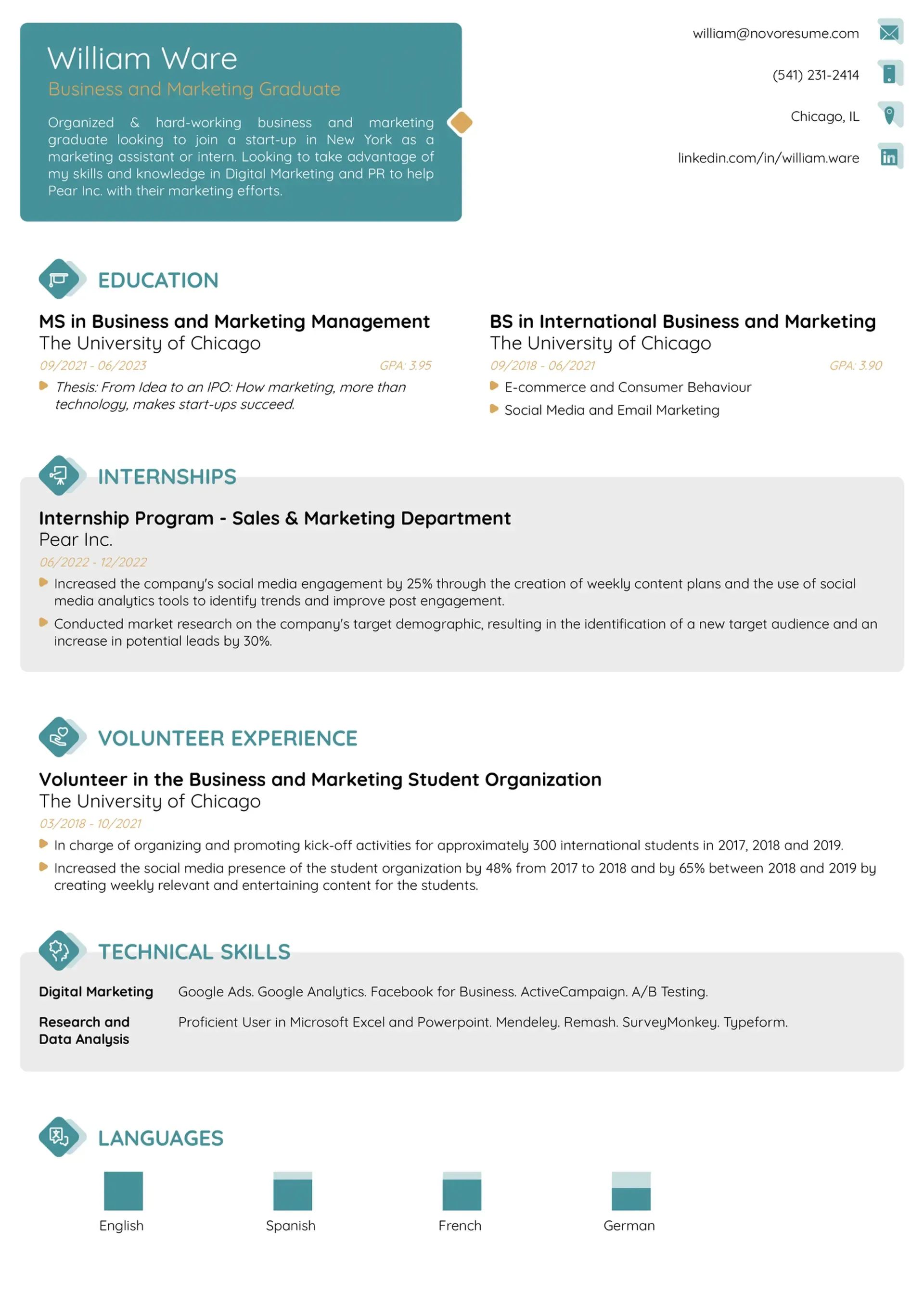
Now, let’s look at the resume of a recent graduate with no experience to see this in action:
Mid-Level (5-10 years)
Once you’ve built up some experience, your resume can typically go back about ten years. That’s enough to showcase career progression while keeping things concise.
For mid-level professionals, employers want to see:
- A clear track record of your growth, such as promotions and expanded responsibilities.
- Impressive achievements that demonstrate impact in your field.
- Relevant roles that connect you to the position you’re targeting.
So, you can leave off your resume any older, unrelated jobs. At this stage, there’s no need to mention the jobs you had as a teenager or internships.
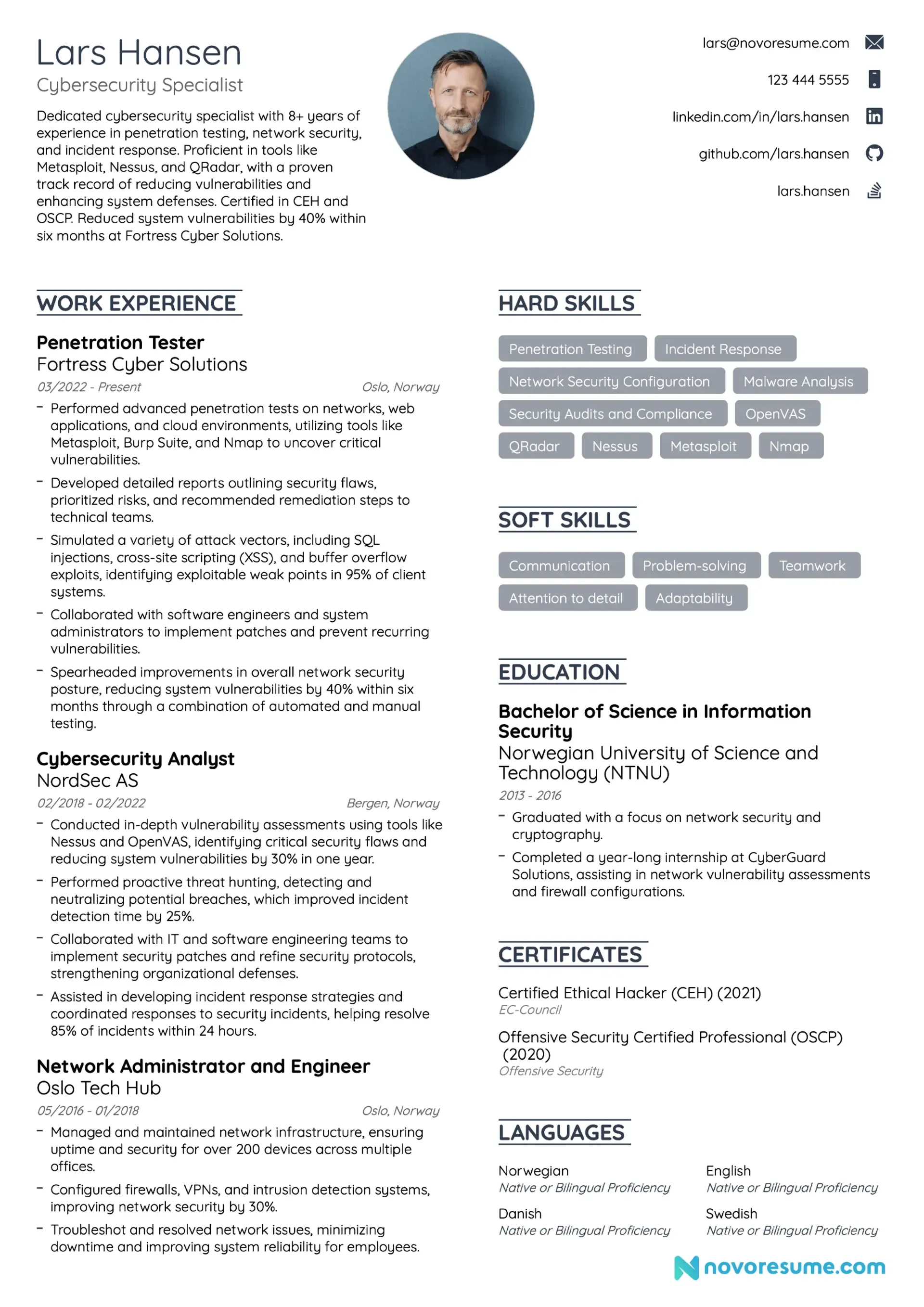
Here’s an example from a cybersecurity specialist’s resume:
Senior-Level (10+ years)
For seasoned professionals, the 10–15-year rule applies more often than not. Going further back risks making your resume too long, highlighting outdated skills, or even opening you up to age-based discrimination.
So, trim down your experience to the most recent, relevant decade or so.
However, there are some exceptions to this.
If you held a very high-level or prestigious role more than 15 years ago (e.g., as a director, VP, CEO, etc), this can strengthen your job application. This goes especially if you’re making a career change – older experience that’s relevant to the new field might be worth including.
At this level, you should build on the mid-level approach by emphasizing leadership, strategic results, and achievements. Not every position you’ve held so far is going to cut it.
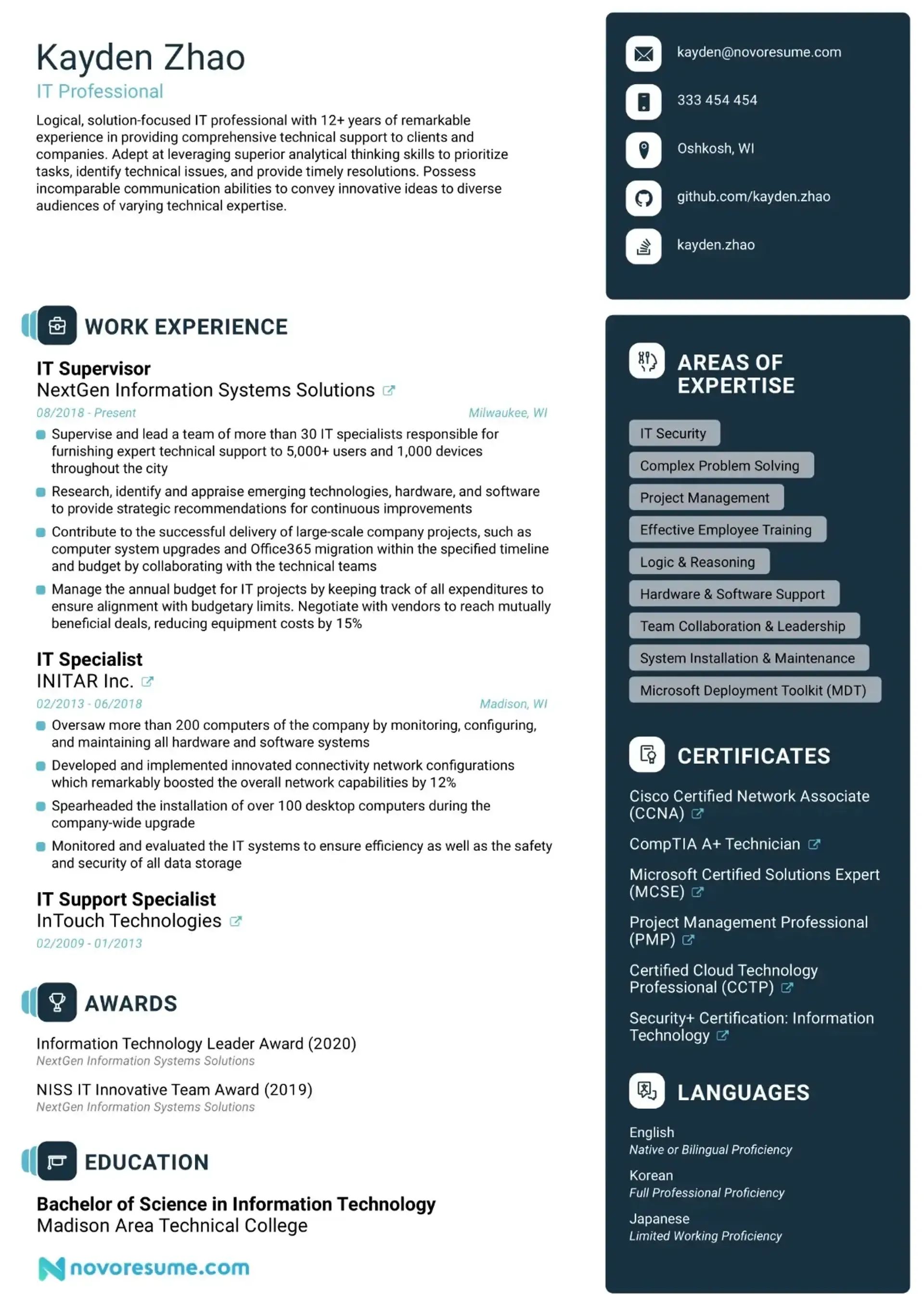
Let’s see how a senior IT professional implements this:
Academic or Research
Once you reach academia, the rules change. Here, you’re more likely to need a CV instead of a resume.
It’s common to revisit the course of your entire career, as in academia, publications, research, and teaching experience remain relevant even decades later.
In this case, keeping things short and sweet isn’t a priority. Instead, make sure to create a comprehensive academic CV. Academic hiring committees want a full picture of your scholarly contributions, so it’s normal for academic CVs to run multiple pages and be far longer than any resume should be.
However, you would skip irrelevant part-time jobs or gigs that aren’t related to your field. Your application for molecular biology research doesn’t need to include your summer job as a pool cleaner, but your time tutoring classmates could add value.
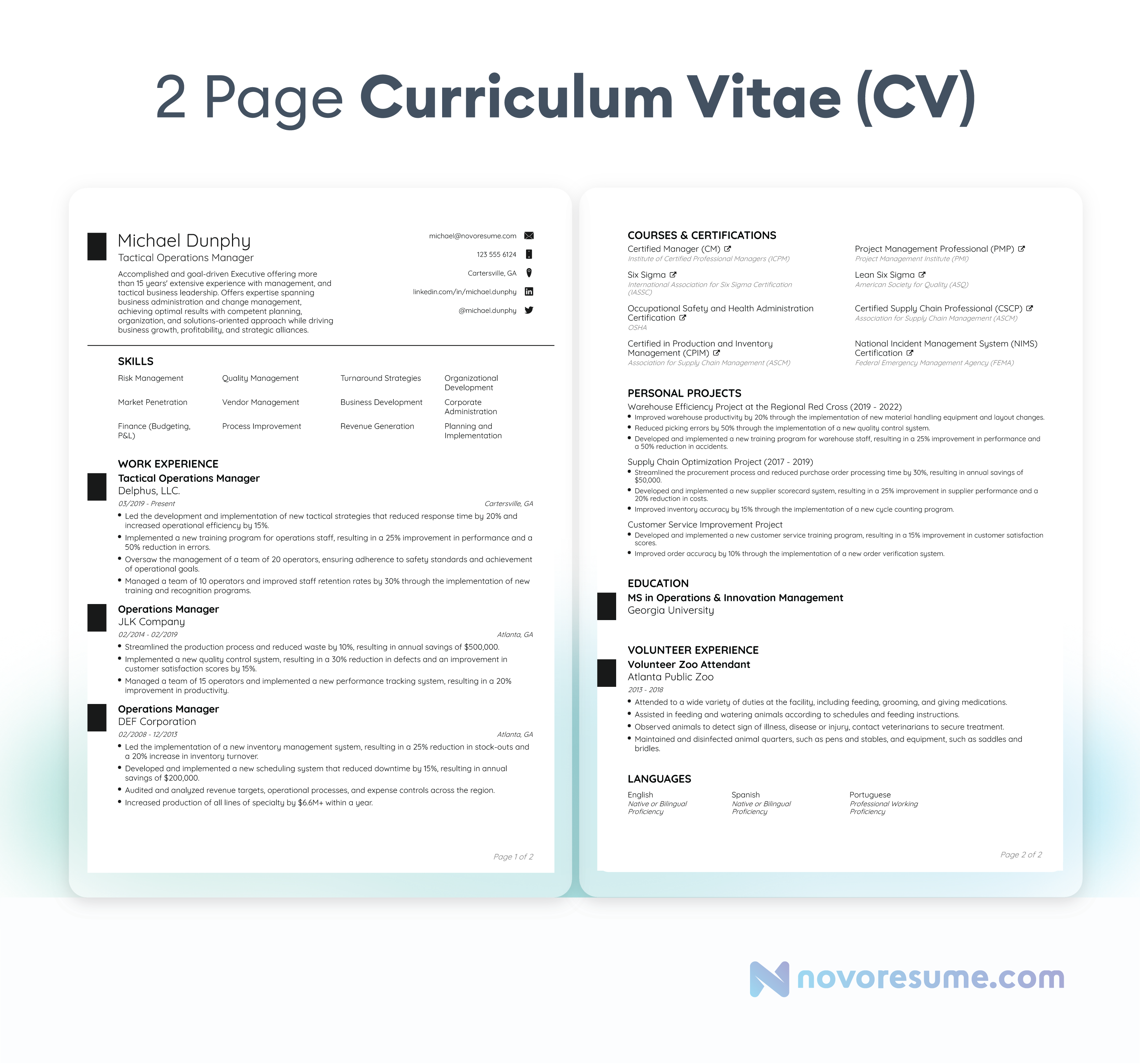
Here’s an example of what an academic CV looks like:
How Many Jobs Should You List on a Resume?
Now you know how far back your resume should go, but how many jobs should you actually list? Let’s see how to handle different situations:
Jobs at the Same Company
If you’ve held multiple roles at the same company, you can just list them as separate entries, just like you would list jobs at different companies. This can keep your resume neat and visually cohesive.
However, if you have a bit more experience and you want to include the roles without wasting precious space, just list them under one company heading. For example:
Roles at the Same Company
Senior AnalystXYZ Company2019–Present- Conducted detailed data analysis to support quarterly business reviews.
- Streamlined Excel reporting workflows, saving 10+ hours per week.
- Presented management insights that guided a successful market expansion.
- Promoted to Senior Analyst in 2022.
- Led a cross-functional analytics project that reduced reporting turnaround time by 30%.
- Mentored 3 junior analysts, boosting team efficiency and skills development.
- Collaborated with
This way, you can highlight your promotions and increasing responsibility while keeping your resume organized. You also don’t need to include repetitive responsibilities; instead, just emphasize the career advancement and new achievements that came with each role.
However, if you had lateral moves (like switching different departments but staying at the same level), we recommend including only the most relevant roles or summarizing the rest.
Jobs at Different Companies
For different companies, prioritize your last three to five positions that are most relevant to the job you’re applying for now. That’s usually more than enough to show your career development without overcrowding your resume.
If you’ve had many short-term jobs, you don’t need to list all of them. Focus on the roles that actually demonstrate your most useful skills, stability, and results.
Here’s an example of how to format it on your resume:
Roles at Different Companies
Regional Sales ManagerABC Tech Solutions2020 – Present- Increased regional sales revenue by 35% in two years through strategic account management and upselling.
- Managed a team of 12 sales reps, implementing coaching programs that improved close rates by 20%.
- Built partnerships with enterprise clients, securing contracts worth over $5M annually.
- Introduced a new CRM workflow that shortened the sales cycle by 15%.
- Recognized with the President’s Club Award (2023) for exceeding annual sales targets.
Sales ExecutiveInnovateCorp2016 – 2020- Consistently exceeded quarterly quotas by an average of 18%.
- Cultivated long-term relationships with mid-market clients, generating over $2M in recurring revenue.
- Trained new hires on prospecting and negotiation techniques.
- Launched a referral program that increased inbound leads by 25%.
Sales AssociateBrightline Retail2013 – 2016- Delivered strong customer service, achieving a top 10% ranking in sales performance across the company.
- Supported regional marketing campaigns that boosted foot traffic and sales.
- Built a foundation in consultative selling and upselling techniques.
However, if you have more freelance experience than that, there are other options. You could either list them as separate work entries, just like you would for different companies, or you could combine them into one work experience entry. Let’s see how a content writer would approach the latter:
Freelance with Multiple Clients
Freelance Content Writer2017–Present- Wrote 40+ SEO-optimized blog posts for TechGrow, helping increase organic traffic by 45% in 6 months.
- Produced long-form thought leadership articles for HealthPlus Clinic, boosting newsletter engagement rates by 30%.
- Created website copy for EcoStyle Fashion, contributing to a 25% rise in online sales within the first quarter post-launch.
- Developed white papers and case studies for FinEdge Solutions, generating leads valued at $500K+.
- Ghostwrote LinkedIn articles for executives, enhancing personal branding and driving 15K+ average impressions per post.
This is a great way to showcase your skills and experience. But if your freelance work has only consisted of short-term projects while you were employed elsewhere, dedicating separate entries to each project could look too sparse.
Instead, we recommend creating a separate section titled something like “Freelance Projects,” where you can briefly describe them and show the impact of your work. Here’s an example from someone doing digital marketing:
Freelance with Short-Term Projects
FREELANCE PROJECTS- NGO Social Media Manager – 06/2025 – 08/2025
Designed and executed a year-long SMM strategy, growing the NGO’s online following by 60%. - Literacy Campaign Lead – 03/2025–09/2025
Created and managed a digital campaign promoting reading habits among youth, reaching 10K+ participants across schools and libraries. - Podcast Marketing Support – 05/2024 – 10/2024
Promoted a literature-focused podcast, doubling downloads within three months. - Community Newsletter Editor – 09/2022–06/2024
Curated and distributed a monthly newsletter, increasing subscriber engagement rates by 35%.
- NGO Social Media Manager – 06/2025 – 08/2025
If your freelance work isn’t relevant, you can either skip it or summarize it in a line or two so it doesn’t distract from your main career narrative.
Volunteer Work
You can include volunteer work in your resume, too, as long as it’s relevant to the role you’re pursuing. Either dedicate a separate section to it in your resume or list it alongside other types of work experience in the corresponding section.
Volunteer roles can showcase leadership, project management, or industry-specific skills. Some can also give you certain certifications, but you should still list only ones that support your target role in some way.
For example, if you volunteered in the Red Cross and you got advanced first aid and CPR training. That’s a very relevant experience if you’re applying to work as a firefighter or in a work environment where safety and emergency response are crucial.
Let’s look at an example:
Volunteer Experience
Community VolunteerRed Cross06/2022–Present- Led logistics for monthly community health workshops attended by 100+ residents.
- Trained fellow volunteers in basic safety and first-aid procedures.
- Supported regional emergency preparedness campaigns, increasing local engagement by 30%.
9 Tips to Keep Your Resume Experience Relevant
You know how far a resume should go, but you should also make sure the information you include is relevant.
Here are a few tried and tested resume tips to get you started:
- Show skill evolution over time. Emphasize promotions, added responsibilities, or new skills to demonstrate your professional growth. Don’t repeat basic skills in your entry for an advanced position.
- Be age-neutral. Avoid including graduation dates older than 15 years or outdated roles that can unnecessarily reveal your age.
- Go back further if you have a gap. If you’ve been out of the workforce for several years, it’s okay to include older experience that highlights your qualifications.
- Handle defunct or acquired companies. If the company you used to work for doesn’t exist anymore, add a note such as “(now part of XYZ Corp)” to give context and credibility to your experience there.
- Modernize your language. Update job descriptions with current industry terminology so your resume doesn’t sound outdated.
- Cut irrelevant roles. If a position doesn’t add value to your application, either summarize it or omit it altogether.
- Highlight achievements over tasks. Use quantifiable results to show impact rather than listing basic responsibilities.
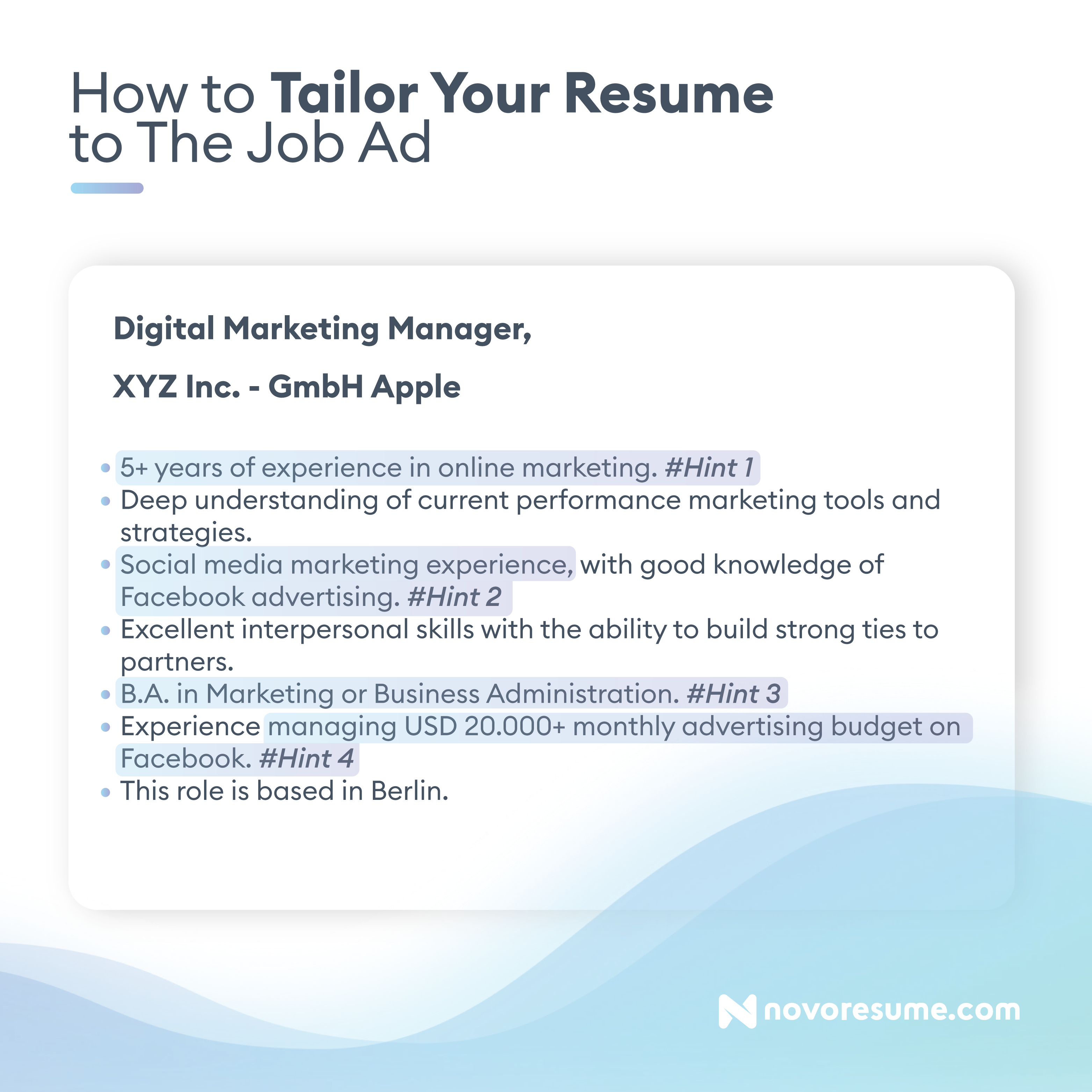
- Tailor for each job. Adjust which roles or details you emphasize depending on the job description and requirements. Reference the job ad to easily tailor your resume to what the employer is looking for.
- Keep formatting consistent. Use the same style for dates, job titles, and bullet points to maintain a polished look.
FAQs on How Far Back a Resume Should Go
Are you still wondering how far back a resume should go? Check out these answers to some of the most frequently asked questions across the web.
Key Takeaways
Congrats on making it this far!
At this point, you’ve got a solid grasp on how to shape your resume so it’s brief, relevant, and perfectly tailored to your career goals. You’ve got this!
Let’s just recap a few key points before you go:
- The general rule is that you shouldn’t go further than 10-15 years on your resume. You should only mention older roles if they’re directly relevant to the job you want.
- Aim for one page unless you’re a senior professional with very extensive experience. In that case, two pages may even be necessary.
- Entry-level resumes usually cover up to the past five years, while mid-level resumes go to about ten years. Senior roles might have a cutoff of about ten to fifteen years, but an academic CV can go back your entire career.
- Focus on your last three to five relevant positions. You can group roles at the same company, summarize less relevant ones, and highlight freelance or volunteer work if it strengthens your case.
- Cut out roles that don’t add value. Your experience delivering pizza isn’t going to help you land an internship, so don’t waste precious space on it.
- Keep your listed experience relevant by prioritizing your achievements, modernizing your language for older roles, and showing how your skills have evolved.
 Add Novorésumé as a preferred source on Google
Get more resume writing tips, career insights, and job search advice in your personalized Google search results.
Related posts

Resume & CV Writing Tips
Technical skills for your resume across 17 fields, from Epic and CAD to GA4 and Python, with a copyable skills-block format and honest skill tiers.

Resume & CV Writing Tips
40+ resume objective examples for students, career changers, and 22 situations, with the 3-part formula and HR survey data on when objectives actually help.

Resume & CV Writing Tips
Resume summary examples across 26 fields, every one quantified, plus the 4-part formula, the no-experience version, and what recruiters scan first.