Updated on April 2, 2026
How Long Does It Take to Find a Job? Timeline & Tips
Wondering how long it takes to find a job? Learn the average timeline and practical tips to speed up your job search today!


Novoresume got people hired at
























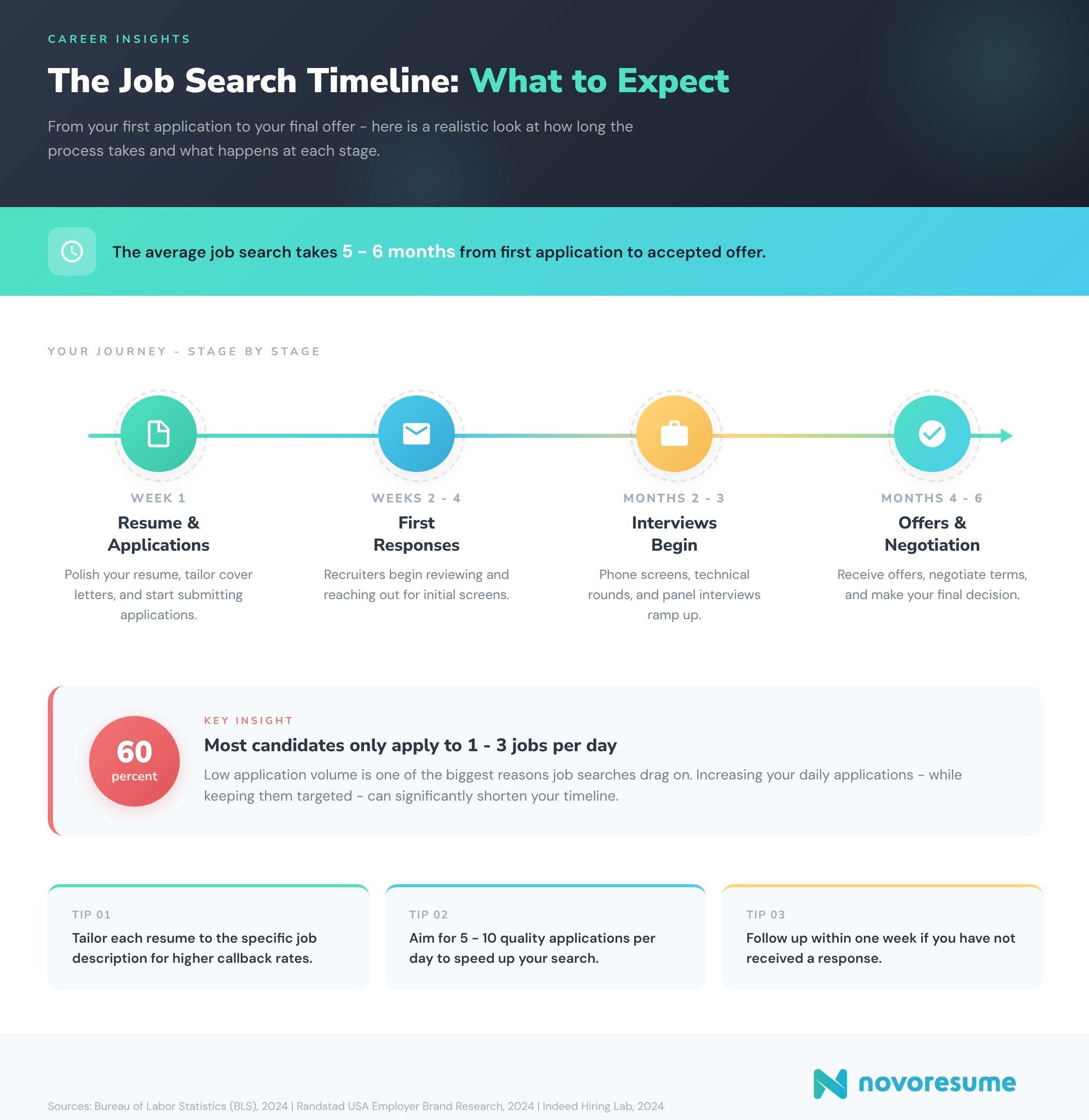
The average job search in the United States takes five to six months. That's the number from Bureau of Labor Statistics data, and it holds up across industries and experience levels. But the average hides something more important: what you do during that time determines whether you land in the faster half or the slower one.
Most job seekers aren't losing to better-qualified candidates. They're losing to better-prepared ones. According to Novoresume's survey of HR professionals, 74% of recruiters spend 20 seconds or less deciding whether a resume is worth reading. That window is smaller than most people realize, and most resumes never recover from a bad first impression.
This guide covers the actual job search timeline, what's driving it in 2026, and nine specific things you can do to move faster.
How Long Does It Take to Find a Job?
On average, it takes about five to six months to find a job in the United States.
According to job-search statistics, the average duration of unemployment was 23 weeks (roughly 5.5 months) as of June 2025. The median sits around 10 weeks, meaning half of job seekers find work faster, but the other half take considerably longer.
That said, this is a national average across all industries, job levels, and demographics. Your personal timeline can vary dramatically.
Here's a rough breakdown based on recent surveys and industry data:
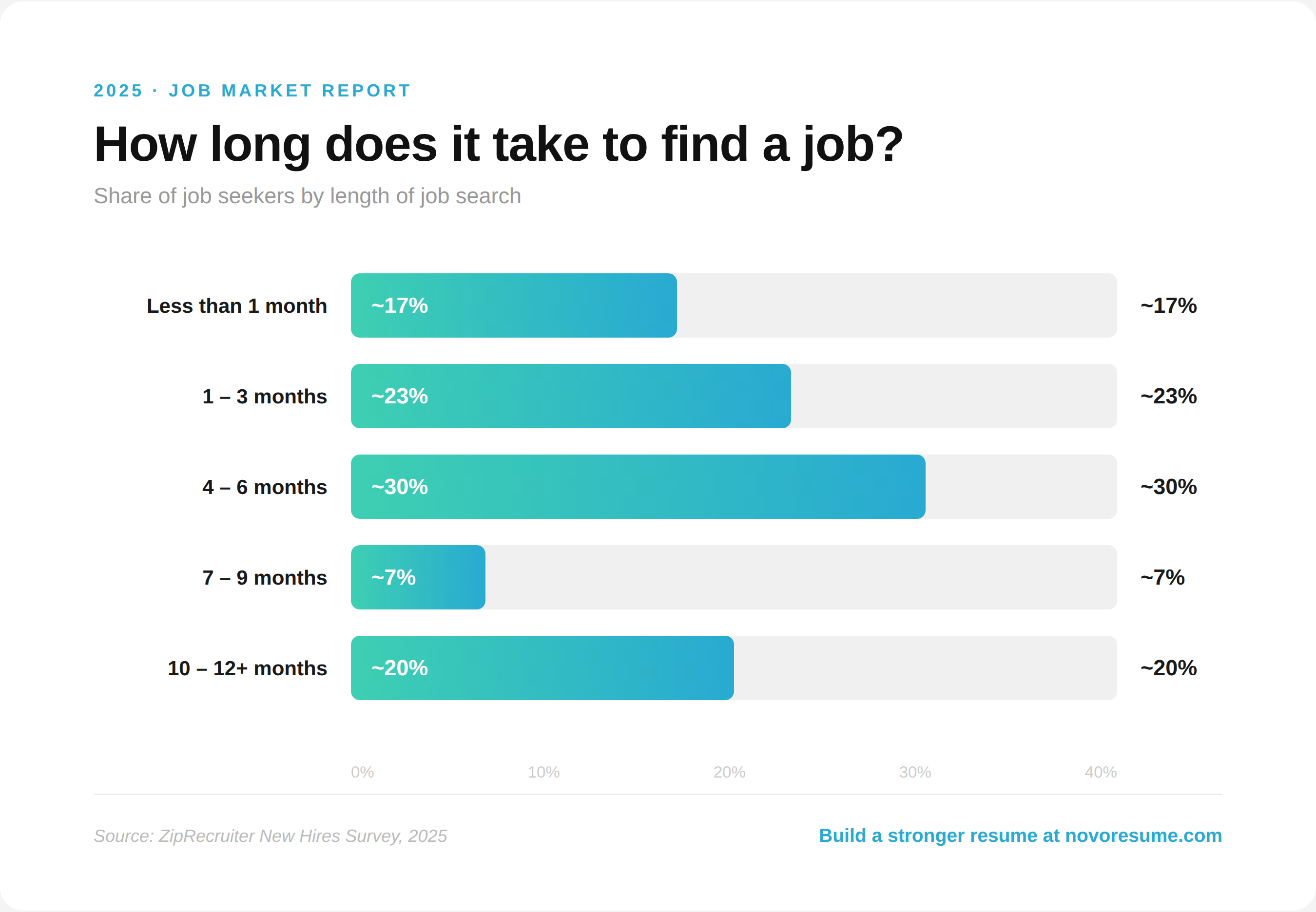
Most job seekers (41.5%), spend less than two hours per day on their search, while 40.3% spend two to four hours daily. Around 60% of candidates apply for just one to three positions per day, while only 2.3% apply for more than 15. These habits directly influence how fast results come in.
The timeline also varies by seniority. Entry-level roles in industries like hospitality or retail can be filled in weeks, while senior and executive positions routinely take three to six months, sometimes longer. Industry matters too: tech and finance roles often involve multiple interview rounds that stretch the process, while healthcare and customer service tend to move faster.
There's no single answer, but if you're several months in and haven't gained traction, it's less about patience and more about strategy.
5 Factors Influencing How Long It Takes to Find a Job
Your job search timeline depends on a few specific factors; some you can control, some you can't. Here's what influences the clock the most:
- Economic conditions. During slowdowns, there are fewer openings and more competition. In late 2025, the number of long-term unemployed (27+ weeks) rose to 1.8 million, up from 1.1 million in early 2023; it’s an increase of over 60%.
- Flexibility. The more rigid you are about title, salary, and work arrangement, the smaller your pool of options. Candidates open to hybrid roles or adjacent positions tend to land jobs faster.
- Location. Some cities have far more openings in certain industries than others, and remote roles mean you're now competing with a national (or global) talent pool.
- Experience. Both too little and too much work experience slow things down. Mid-career professionals typically have the shortest search times because they're experienced enough to be valuable without being overqualified.
- Employment length. The longer you've been out of work, the harder it becomes to get back in. If you have a gap, fill it with freelance work, volunteer projects, or certifications rather than leaving it blank.
9 Tips to Speed Up Your Job Hunt
Let’s see what you can actually do about speeding up your job search.
These essential job search tips are backed by data; apply them consistently, and your hunt will move faster.
#1. Tailor Your Resume and Cover Letter for Each Role
This is the single most effective thing you can do, and most candidates skip it.
According to our job-seeker survey, only 33% of job seekers create different versions of their resume for different roles. Another 48% make minor adjustments, and 19% submit the exact same resume everywhere. For cover letters, the numbers are similar: 34% fully tailor theirs, 35% make minor tweaks, and 31% submit the same one every time.
That's a problem, because Applicant Tracking Systems (ATS) filter resumes based on keyword matches to the job description. If your resume doesn't match the role's specific language and requirements, it might never reach a human.
Here's what to do: for each application, read the job description carefully and identify the key skills, qualifications, and terms. Then adjust your resume summary, skills section, and bullet points to mirror that language. You don't need to rewrite the whole thing; targeted tweaks to 20-30% of the content can make a big difference.
The same goes for cover letters. A generic letter tells the employer nothing. A tailored one that connects your specific experience to their specific needs shows you've done your homework.
#2. Strengthen Your Online Presence to Attract Recruiters
Your resume isn't the only thing recruiters see. Before (or instead of) reading your application, many will look you up online – so you should start with optimizing your LinkedIn.
LinkedIn is the most popular job search platform, with 75.4% of job seekers using it to find roles. But it's not just a job board; it's a search engine for recruiters. If your profile is incomplete, outdated, or generic, you're invisible to them.
For starters, optimize your LinkedIn summary. Don't just list your job title; write a headline that includes your target role and key skills (e.g., "Marketing Manager | B2B SaaS | Content Strategy & Growth"). Your summary should read like a strong resume summary: concise, achievement-driven, and tailored to the type of roles you want.
Beyond LinkedIn, think about your broader personal brand. If you're in a creative field, a portfolio site matters. If you're in tech, your GitHub profile might get more attention than your resume. Even a well-curated professional Twitter/X or industry blog presence can set you apart.
Ensure your job titles, dates, and narrative are consistent across your resume, LinkedIn, and any other platform. Discrepancies raise red flags.
#3. Search Often and Apply Consistently
The data is clear: most people aren't putting in enough volume. About 60% of candidates apply for only 1 to 3 positions per day. Only 10% apply for six to ten, and a mere 2.3% apply for more than 15. While quality matters more than quantity, applying to just one or two jobs per day will extend your search significantly.
A good target is three to five thoughtful applications per day. That means roles you're genuinely qualified for, with tailored resumes and cover letters for each.
You can also use ChatGPT to boost your job search. Use it to pull keywords from job descriptions, draft cover letter starting points, or research companies. Just don't let AI do all the work; hiring managers can spot generic, AI-generated content quickly, and about 20% of recruiters say they'd reject a resume they suspect was fully AI-written. Use AI as a collaborator, not a ghostwriter.
#4. Use a Structured Job Search Schedule
A structured schedule keeps your search moving.
Set specific hours for searching, applying, networking, and skill-building. For example, a structured weekly schedule might look like this:
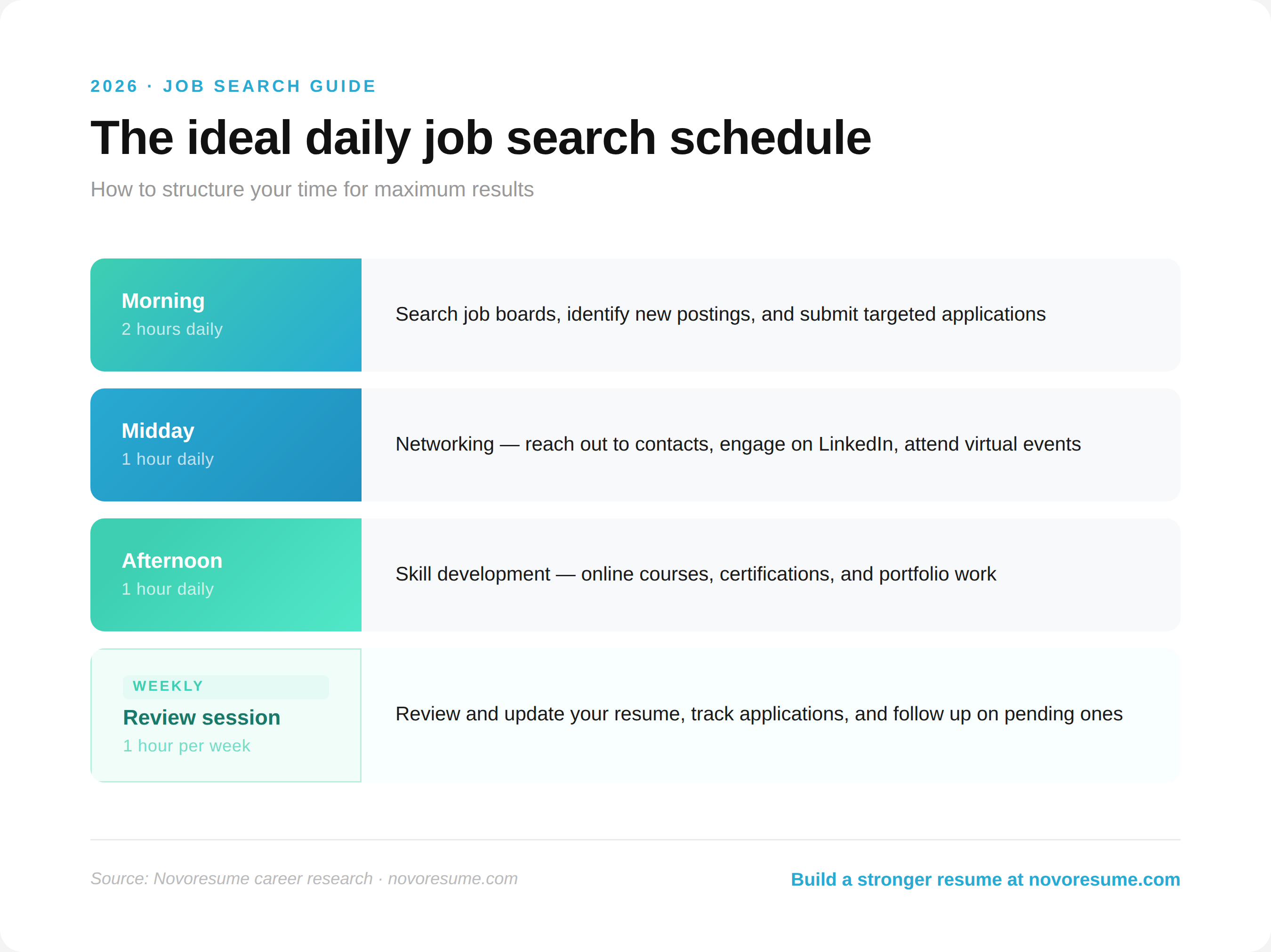
This adds up to roughly 20-25 hours per week, which is sustainable and productive. The key is consistency over intensity. Burning out on a 10-hour application marathon one day and doing nothing the next four is far less effective than steady daily effort.
Additionally, always track your job search. Use a spreadsheet or a tool like Huntr or Notion to log every application, its status, follow-up dates, and outcomes. Knowing what's working (and what isn't) lets you adjust your approach.
#5. Reach Out to Employers Beyond Job Boards
Online job boards are the most common way to find openings; almost 67% of candidates use them. But they're also the most competitive channel. For popular postings, hundreds (sometimes thousands) of people apply for the same role.
Going beyond job boards gives you less competition. Here are a few ways to do that:
- Email your resume directly. Identify companies you'd like to work for, find the hiring manager or department head's email, and email your resume in a brief, personalized message. This bypasses the ATS entirely and puts your application in front of a decision-maker. Keep the email short; two to three sentences about why you're reaching out, one sentence connecting your experience to their needs, and a polite close.
- Ask for referrals. According to the survey, 56.7% of job seekers find opportunities through referrals from friends and acquaintances. A candidate who includes a reference in their resume is significantly more likely to get an interview and an offer than a cold applicant. Don't be shy about telling your network that you're looking.
- Attend industry events. Career fairs, conferences, and even local meetups can be useful for professional networking and connect you with employers who aren't actively posting jobs online. About 23.3% of job seekers use career events, and 13.6% attend networking events as part of their search.
#6. Stay Open to Roles Outside Your Original Plan
It's natural to have a specific role or title in mind when you start your search. But rigidity can cost you months.
Consider adjacent roles that use your core skills but hold different titles. A marketing manager could thrive as a brand strategist. A software developer might find a great fit in a solutions engineer role. A teacher's skills translate well into corporate training or instructional design.
Temporary, contract, or freelance work can also bridge the gap. These roles keep your resume current, expand your network, and sometimes convert into full-time positions. According to career experts, the worst response to a prolonged job search is jumping into the wrong job. However, taking a strategic stepping-stone role is different from settling.
You're not abandoning your goals; changing careers might mean you're casting a wider net so you don't miss strong opportunities while holding out for a perfect one.
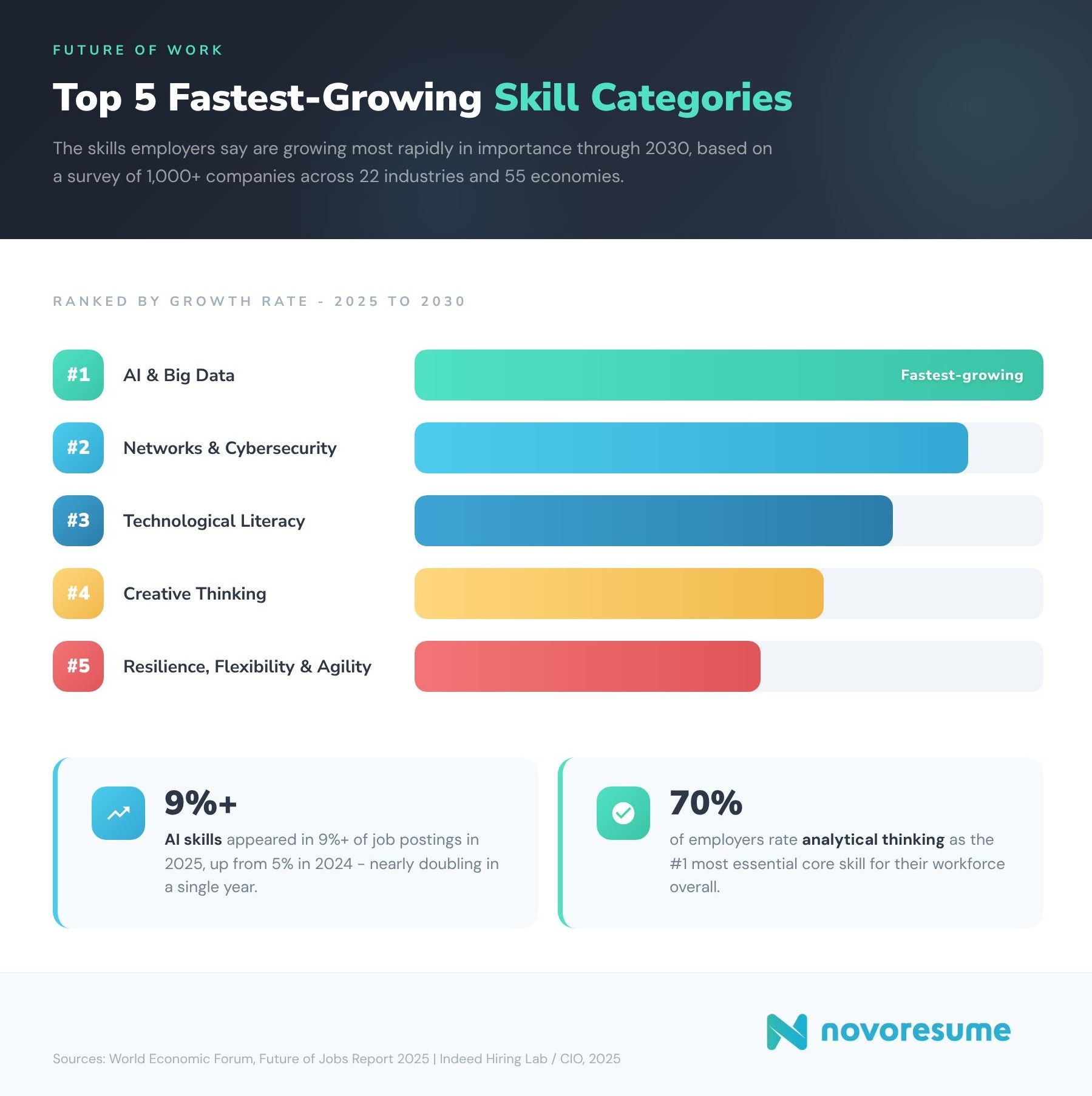
#7. Build In-Demand Skills
If your search is stalling, it might be a sign that the market wants something you haven't demonstrated yet.
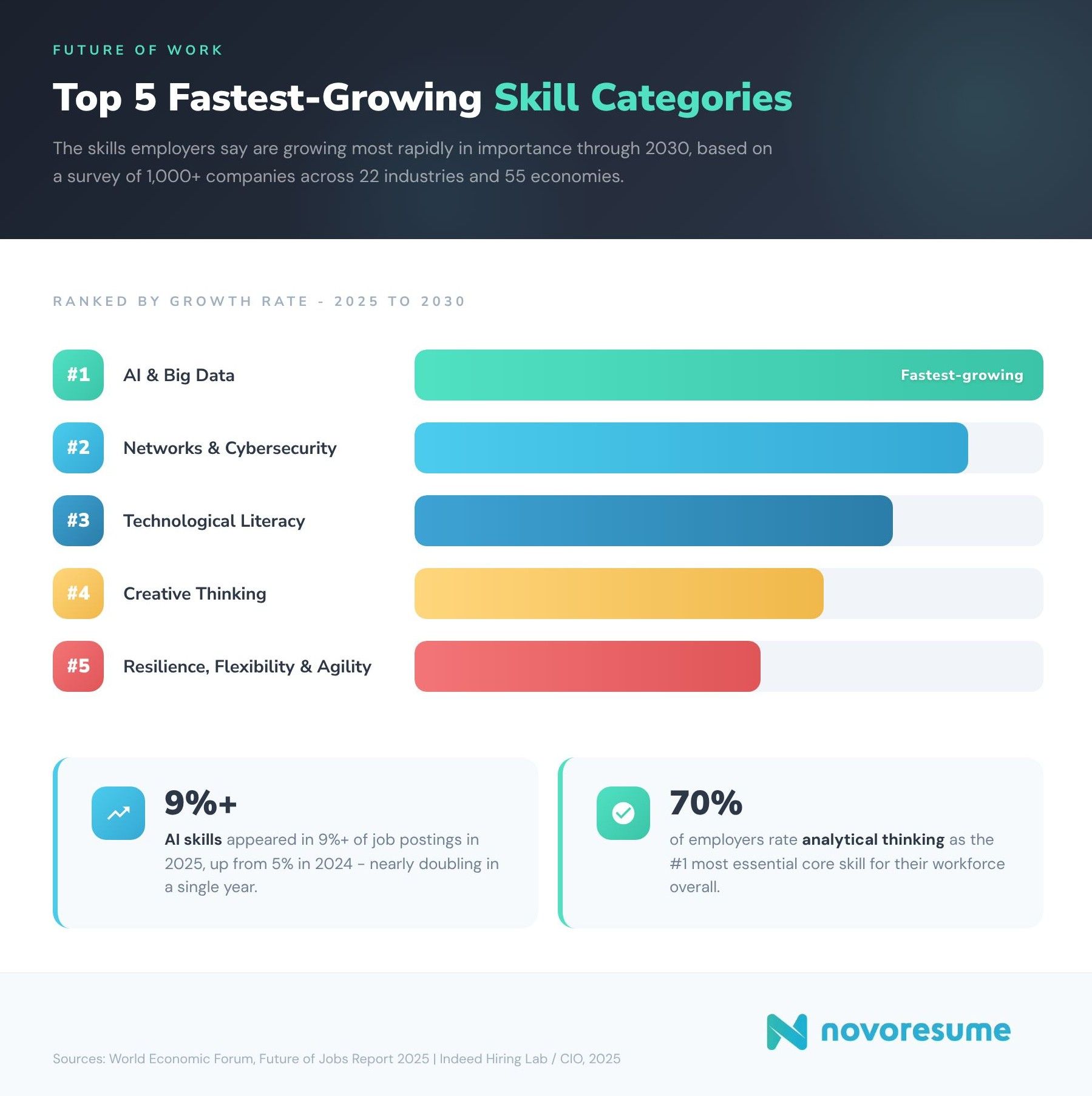
Employers increasingly prioritize candidates who demonstrate proficiency with current tools and technologies. AI skills, in particular, have become a major differentiator across industries, not just in tech. If you can use AI tools for data analysis, content creation, or marketing automation, that makes you a stronger candidate.
Free and low-cost platforms like Coursera, LinkedIn Learning, Google Career Certificates, and edX offer courses that can be completed in weeks. Adding a certification to your resume fills gaps, demonstrates initiative, and gives you something concrete to talk about in interviews.
Focus on skills that employers actually want; those that appear repeatedly in job descriptions for your target roles. If you keep seeing "data analysis," or "project management," or "AI tools," that's the market telling you what to learn.
#8. Research the Job Market Before You Quit
If you're currently employed but planning to leave, do your homework before handing in your notice.
Research companies and check how many roles are available in your target field and location. Look at how long similar positions have been posted (a job that's been open for 60+ days might signal a problematic employer or low demand). Talk to recruiters in your industry to get a realistic picture of the timeline.
The five-to-six-month average means you should ideally have enough savings to cover at least that long without income. If you don't, it's worth starting your search while you're still employed, even though it's harder to manage while working full-time.
Searching while employed also gives you leverage. You can be more selective, negotiate better offers, and avoid the resume gap that comes with unemployment. It's slower, but it's strategically smarter.
#9. Use a Resume Builder to Stand Out
A polished, well-structured resume is a competitive advantage. Formatting issues, inconsistent design, and poor readability can lead to your application being rejected before anyone reads the content.
Resume builders like Novorésumé take the guesswork out of design and formatting. You get ATS-friendly templates that are clean, modern, and tested to pass automated screening. The platform also guides you through writing each section, so you're not staring at a blank page.
Around 30% of job seekers complete their resumes in less than a day, while 40% take 1 to 3 days. A resume builder can significantly cut that time while producing a more professional result than a blank Word document or a free template.
If your resume isn't getting responses after 50+ applications, the problem might not be your experience – it might be your resume. Spending an hour in a purpose-built tool can pay off more than hours of manual formatting.
Frequently Asked Questions
Key Takeaways
And that’s a wrap!
That covers everything you need to know about the job search timeline. Before you go, here's a quick recap:
- The average U.S. job search takes about five to six months, but your timeline depends on industry, experience, and strategy.
- Economic conditions, flexibility, location, experience level, and unemployment duration are the key factors shaping your search.
- Tailor your resume and cover letter for each role; only 33% of candidates do this, and it's the highest-impact change you can make.
- Optimize your LinkedIn profile. It's the top platform, used by 75.4% of seekers.
- Go beyond job boards with direct outreach, referrals, and networking.
- Use AI to speed up research and drafting, but keep the final product authentic.
- Build in-demand skills, especially AI-related ones, to stay competitive.
- Treat your search like a job: set a schedule, track applications, and stay consistent.
 Add Novorésumé as a preferred source on Google
Get more resume writing tips, career insights, and job search advice in your personalized Google search results.
Related posts

Job Interviews & Find A Job
Words and adjectives to describe yourself in interviews, on your resume, and in bios. Grouped by trait, with worked answers and the 10 words to avoid.

Job Interviews & Find A Job
100+ AI hiring statistics for 2026: employer adoption, AI resumes and cover letters, interview cheating, and detection rates, from our four 2026 surveys.

Job Interviews & Find A Job
90+ Gen Z workplace statistics for 2026: workforce share, the entry-level squeeze, AI, tenure, money, and the management myths. From 20+ primary sources.