Updated on February 25, 2026
25 Resume Tips for Older Workers in 2026
Want to refresh your resume and stand out at any age? Check out these resume tips for older workers!


Novoresume got people hired at
























If you're over 50 years old and job hunting, you might be getting the feeling that things have changed in the professional world.
You are likely competing with younger candidates who were raised with tech, trying to fit decades of experience onto two pages, or wondering whether listing your graduation year will work against you.
Your experience is a major asset, but you need to navigate the job market a little differently than you did 10 or 20 years ago. That starts with your resume.
In this article, we’ll walk you through practical, up-to-date resume tips tailored for older workers.
Whether you're reentering the workforce, making a career change, or just trying to stay competitive, we’ll show you how to present your skills with confidence and land the job you deserve.
Let’s dive in!
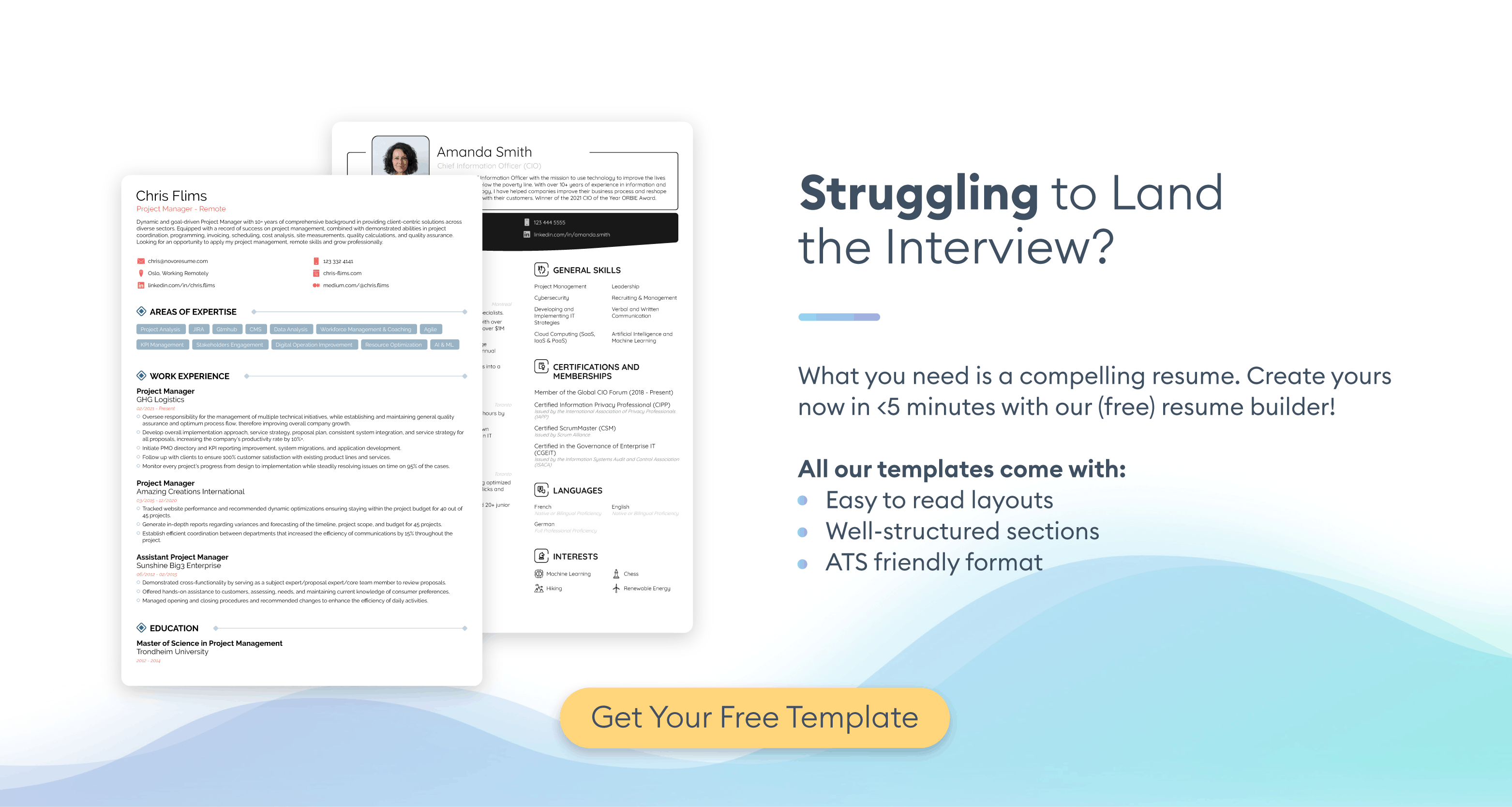
Want to make sure your resume complements your years of experience? Use our professional resume builder to create your resume in minutes!
Choose a resume template to get started.
7 Resume Layout Tips
Before the hiring manager reads your resume, they’re going to look at it. So, you need to make sure it matches their expectations.
Both hiring managers and the applicant tracking systems (ATS) employers use scan resumes quickly, so your layout needs to be clean, focused, and easy to navigate.
Here’s how to get the foundation right:
- Choose a modern template. Dated fonts, bulky borders, and old-school designs can work against you. Go for a sleek, professional layout that reflects the current trends.
- Keep it short. Aim for one to two pages, max. You don’t need to list every job you’ve had, just the most recent and relevant experiences. Hiring managers won’t read more than they have to.
- Send the appropriate file format. PDF preserves your layout across any device, but if the job listing asks for a Word doc or another file type, stick to that.
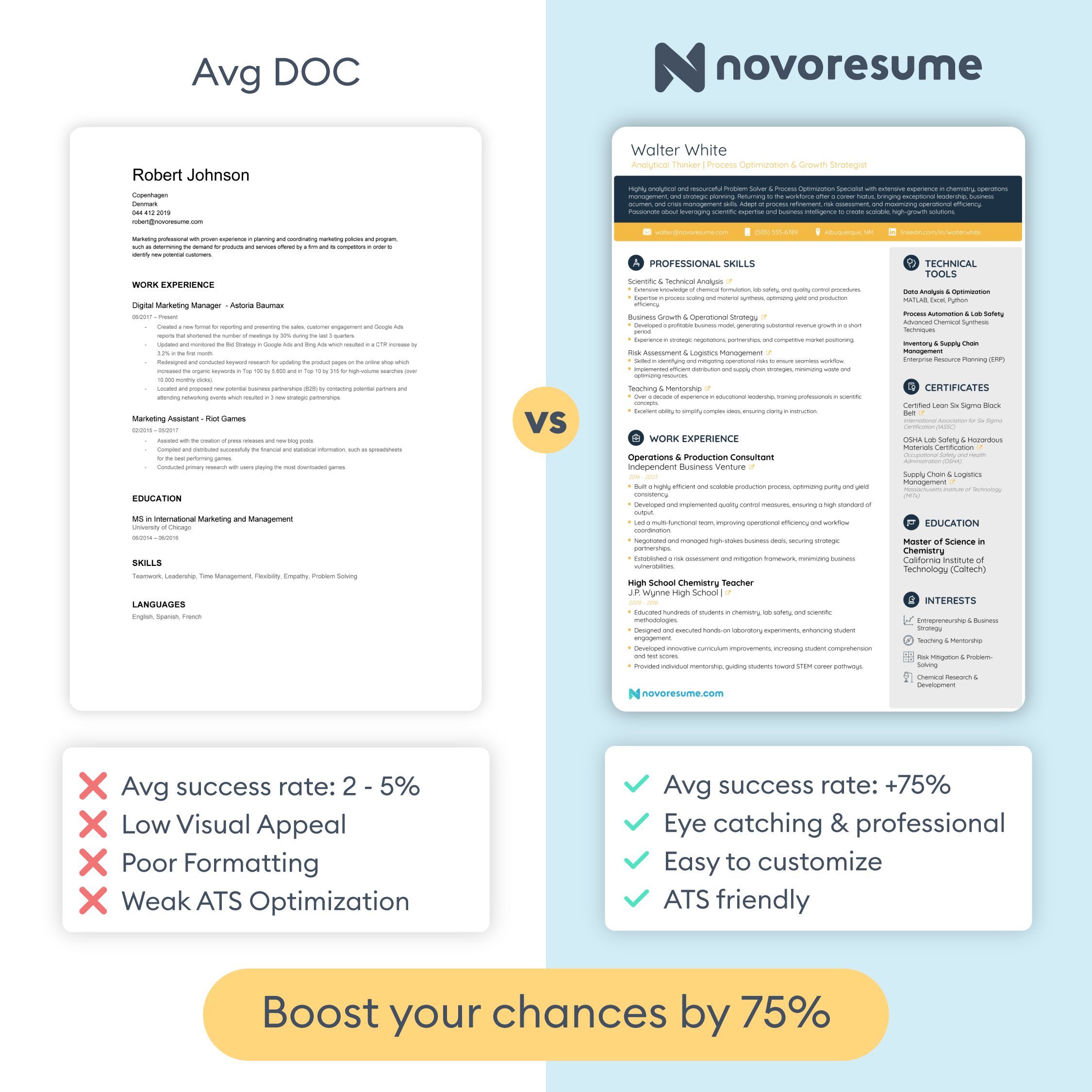
- Ensure ATS compatibility. Most companies use applicant tracking systems to filter resumes. So, avoid tables, graphics, or unusual fonts that can confuse the ATS and reject your resume before a human sees it.
- Add a value-driven summary. Write a professional resume summary that highlights your strengths, career focus, and the value you bring to employers.
- Use clear section headings. Standard headings like Work Experience, Education, and Skills should stand out and follow a consistent style throughout your resume. Don't come up with new header titles to look more creative, as that makes it harder for both humans and ATS to navigate your resume.
- Stick to reverse-chronological format. This is hands down the most common resume format. It’s always ATS-friendly, it makes your career path easy to follow, and it’s just what recruiters expect to see.
9 Resume Writing Tips
Once your resume is structured properly, it’s time to fine-tune its contents. This is where you show hiring managers how your age and experience are an asset, not a liability.
Follow these resume tips to make your job application shine through:
- Show recent impact. Focus your resume on what you’ve accomplished in the past 10–15 years, especially the achievements that reflect your current strengths and industry relevance.
- Keep it within the last decade. Older roles can lose relevance fast. Put your energy into sharpening the last 10–15 years of your work experience since this is what most employers care about.
- Group older jobs together. If you worked in the same field for 30+ years, just group earlier positions into a short summary or a separate section at the bottom. No need to provide extensive bullet points explaining your every role.
- Lead with your achievements. Instead of listing tasks, highlight what you achieved. Start with strong action verbs and end with the impact you made.
- Add quantifiable metrics. Numbers catch attention. Use any metrics, percentages, time savings, or dollar values to give context to your accomplishments.
- Highlight leadership and mentorship. Show how you’ve led teams, trained coworkers, or supported junior staff. These are all strengths that come with experience.
- Show adaptability. Mention any transformations you’ve helped drive such as tech upgrades, restructures or rebrands. Adaptability is a top trait employers look for.
- List modern tools. Include modern tools, platforms, or methodologies you’ve worked with, especially ones mentioned in the job ad.
- Reference the job ad. Mirror the job ad’s language naturally. Use keywords from the job description where they make sense to get a higher ATS score and show the hiring manager you mean business.
9 Tips to Avoid Age Bias
You can’t control a recruiter’s assumptions or bias, but you can control what your resume tells them at a glance.
Here’s how you can avoid common age-related resume red flags while focusing on your value, skills, and momentum.
- Omit older grad years. Unless specifically required, there's no need to include your graduation year. Especially if your education took place more than 15–20 years ago.
- Use a modern email and LinkedIn. If you’re still using a Yahoo or an AOL address, switch to something more recent, like Gmail or Proton. Also be sure to include an updated LinkedIn profile to show you’re digitally fluent.
- Remove legacy certifications. If a tool or program you’re certified in hasn’t been used in the industry for years, leave it off. Prioritize skills that employers value today.
- Keep the chronology concise. Avoid listing jobs from decades ago unless they are absolutely necessary. Always focus on your most recent experience and relevant roles.
- Consider a hybrid resume format. A hybrid format lets you lead with your skills and accomplishments before listing your work history, which is a good way to take the attention away from any employment gaps you might have.
- Show ongoing growth. Demonstrate that you’re still learning, adapting, and evolving in your field. Career development shows the hiring manager you’re a proactive employee.
- Add recent courses. Taking courses or earning new certifications shows you’re investing in your growth. Whether they’re in tech, communication, or leadership, be sure to add them.
- Mention volunteering or consulting. Even if it’s not full-time employment, recent volunteer projects or freelance roles show engagement, relevance, and initiative.
- Link a portfolio or thought leadership. If you have a personal website, blog, or recent project work, link it. Showing current work adds credibility and reinforces your expertise.
Frequently Asked Questions
Are you still wondering something about writing a resume as an older worker? Read the answers to the most frequently asked questions below.
Conclusion
Now that you’ve made it to the end of our article, you know that age doesn’t have to be a barrier to a great career. And as long as your resume complements your expertise, it’s easy to get there.
With a few modern updates, a clear focus on your recent accomplishments, and the right format, you can present your experience as the asset it truly is.
With the right structure, language, and mindset, your resume will tell employers you’re exactly who they need, and you’ll land interviews in no time.
 Add Novorésumé as a preferred source on Google
Get more resume writing tips, career insights, and job search advice in your personalized Google search results.
Related posts

Resume & CV Writing Tips
Technical skills for your resume across 17 fields, from Epic and CAD to GA4 and Python, with a copyable skills-block format and honest skill tiers.

Resume & CV Writing Tips
40+ resume objective examples for students, career changers, and 22 situations, with the 3-part formula and HR survey data on when objectives actually help.

Resume & CV Writing Tips
Resume summary examples across 26 fields, every one quantified, plus the 4-part formula, the no-experience version, and what recruiters scan first.