























How to Write a Healthcare Resume
Healthcare hiring is structured around credentials. The first thing a healthcare recruiter or hiring manager checks is whether you have the required licence and certifications for the role. Without those, nothing else matters. With those, the rest of the resume gets read.
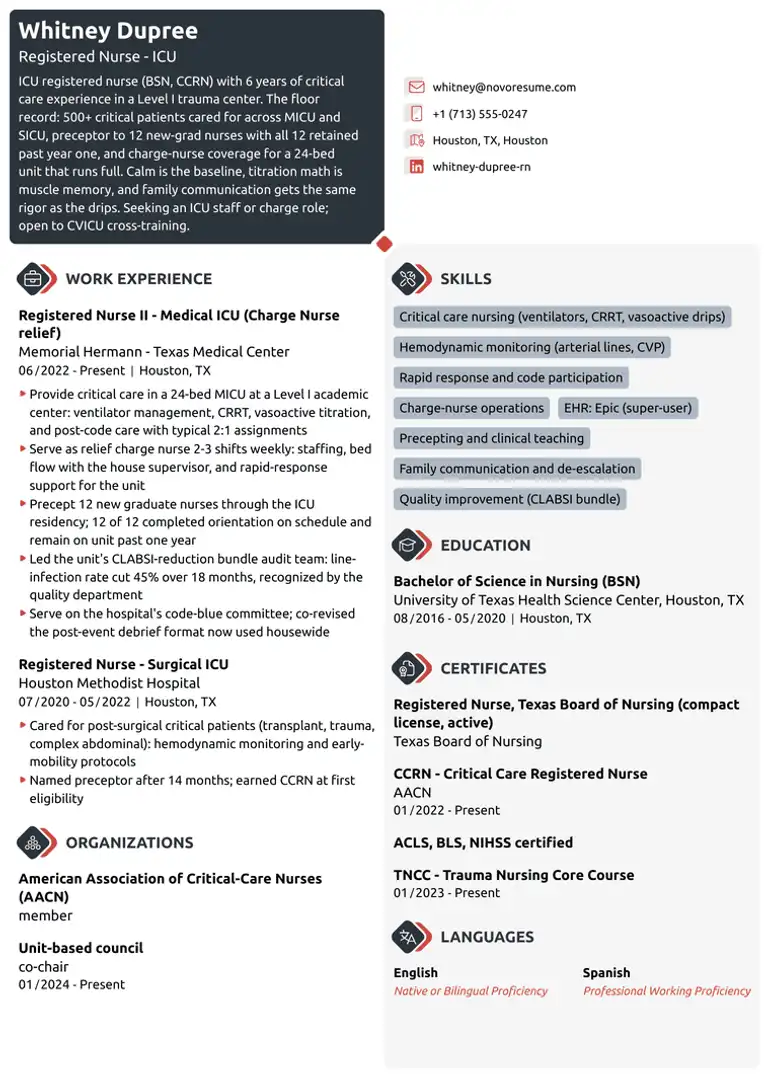
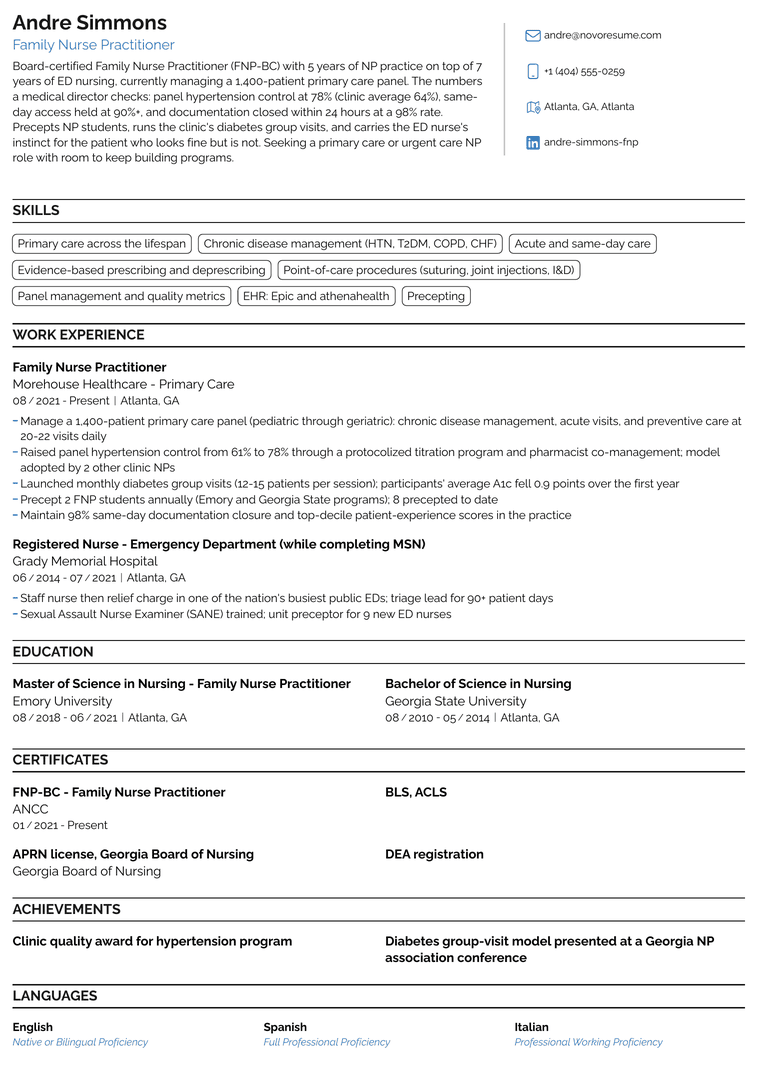
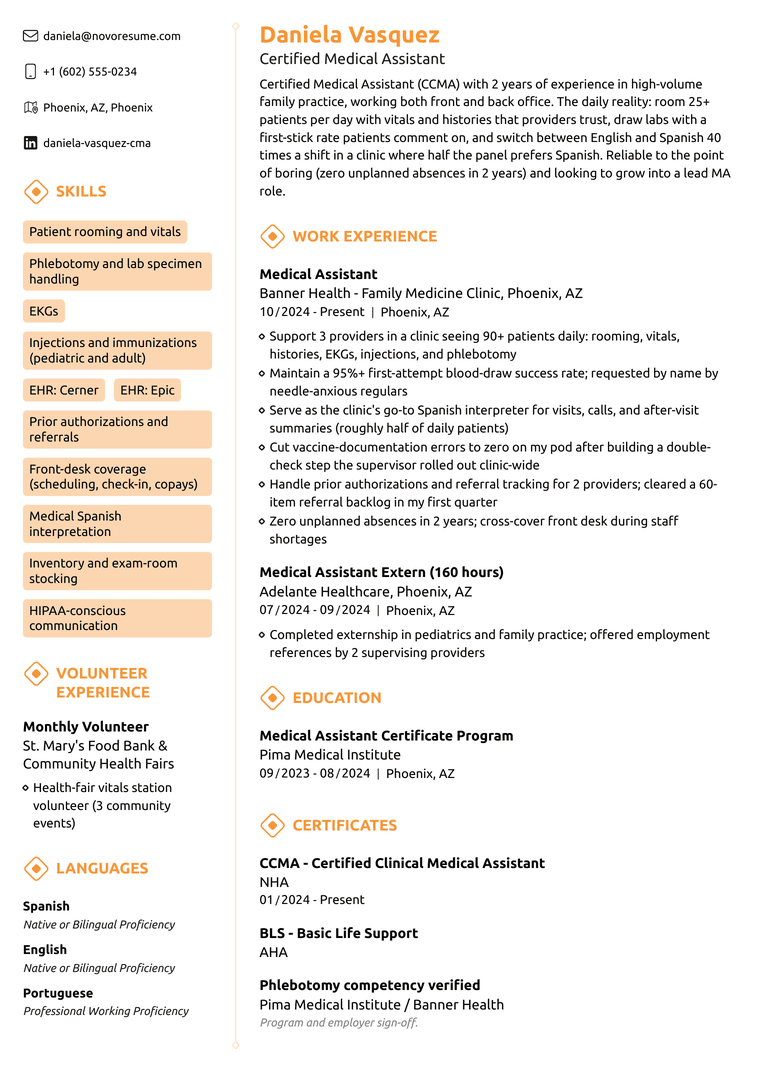
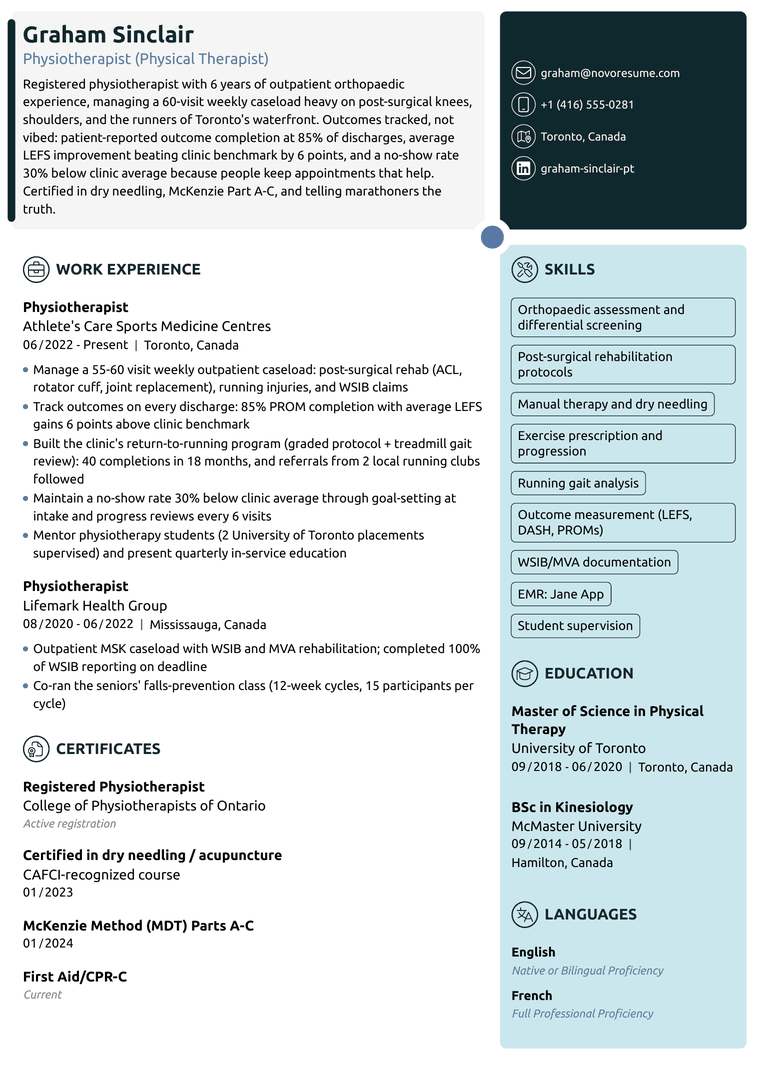
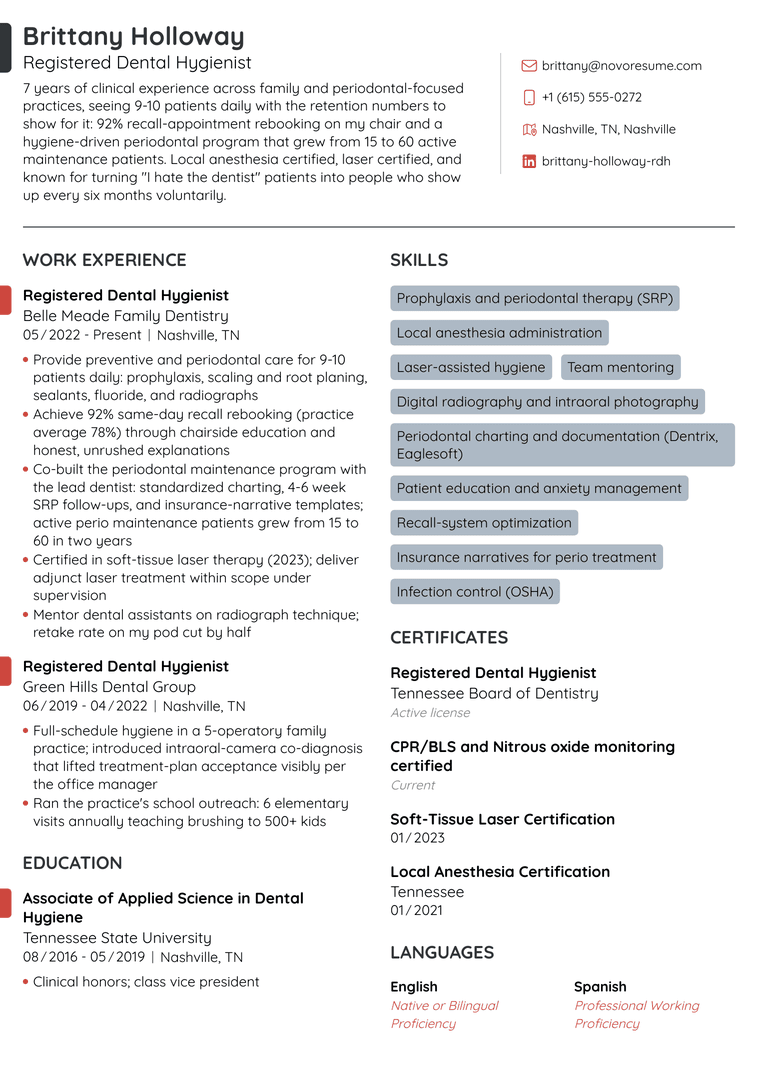
Start with the header, including any active licence information near your contact details. The licence section comes next (or sometimes lives in the header itself), with licence type, state, licence number if appropriate, and expiration date. Certifications follow (BLS, ACLS, PALS, specialty certifications), each with expiration dates that recruiters will verify.
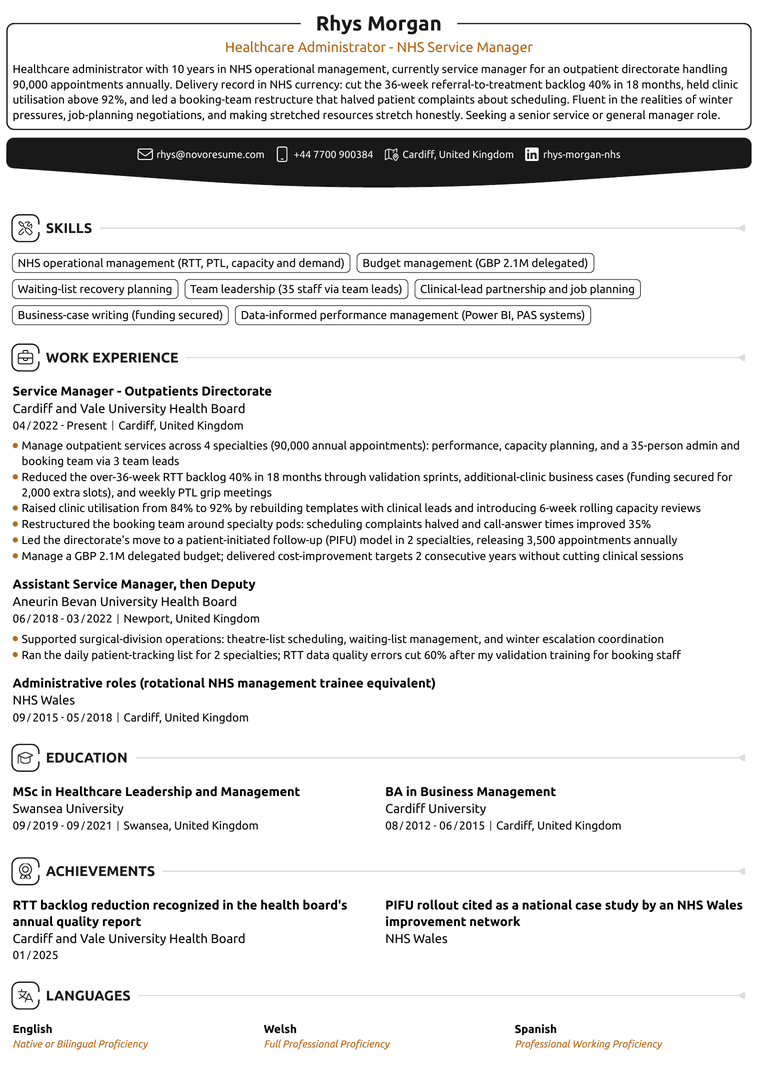
Then comes specialty experience, which should be its own dedicated section or clearly visible in the work history. For nurses, that's the unit and patient population (ICU, Med-Surg, ED, OR). For physicians, it's board certification and post-graduate training. For allied health, it's the settings and patient types you've worked with. The work history that follows should detail clinical experience with specific procedures, populations, and outcomes rather than generic "patient care" bullets.
Healthcare resumes typically run one to two pages depending on seniority. PDF always. Mention EMR systems you've used (Epic, Cerner, Meditech) because hiring managers care which ones you know.


