























How to Write a Legal Resume
Legal hiring conventions are stricter than almost any other industry. The format expectations are absolute. The content expectations are precise. Deviating from convention often gets resumes filtered before they reach a human reader, especially at BigLaw firms.
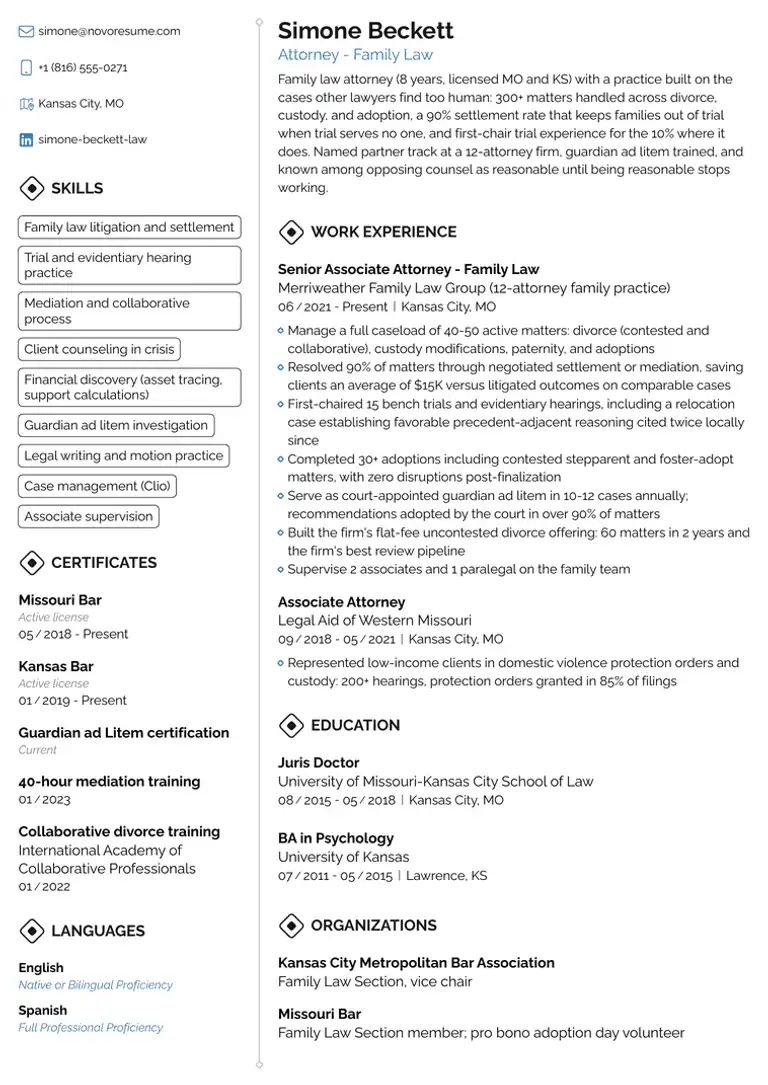
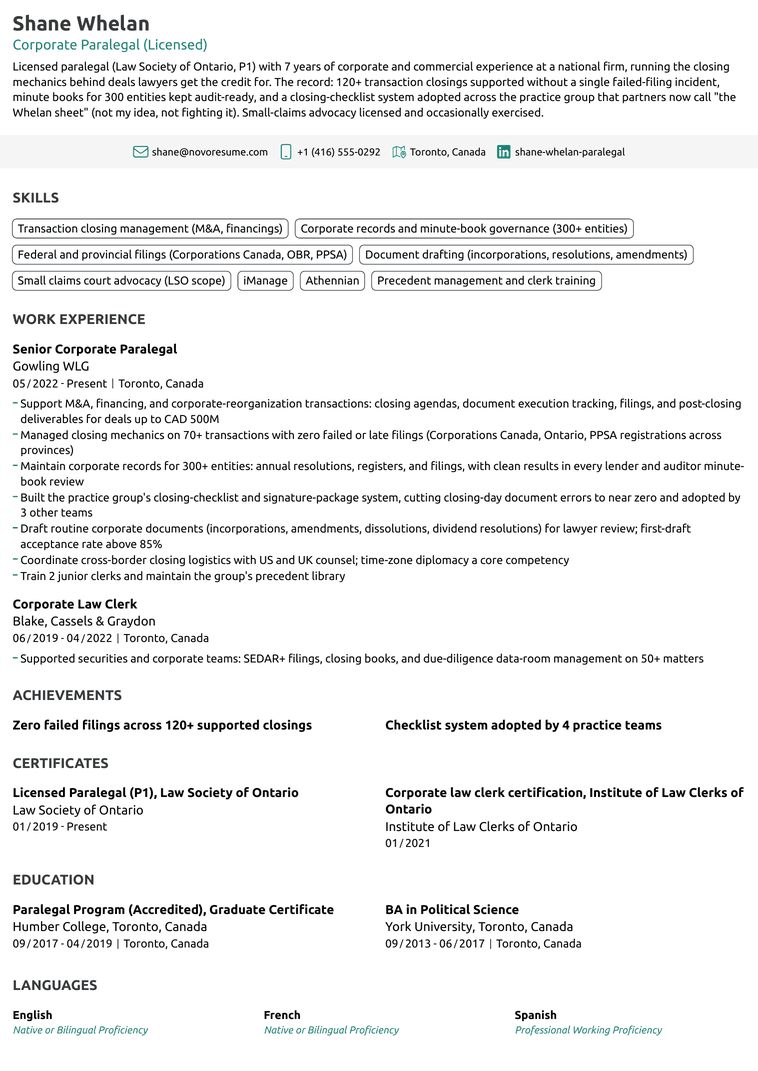
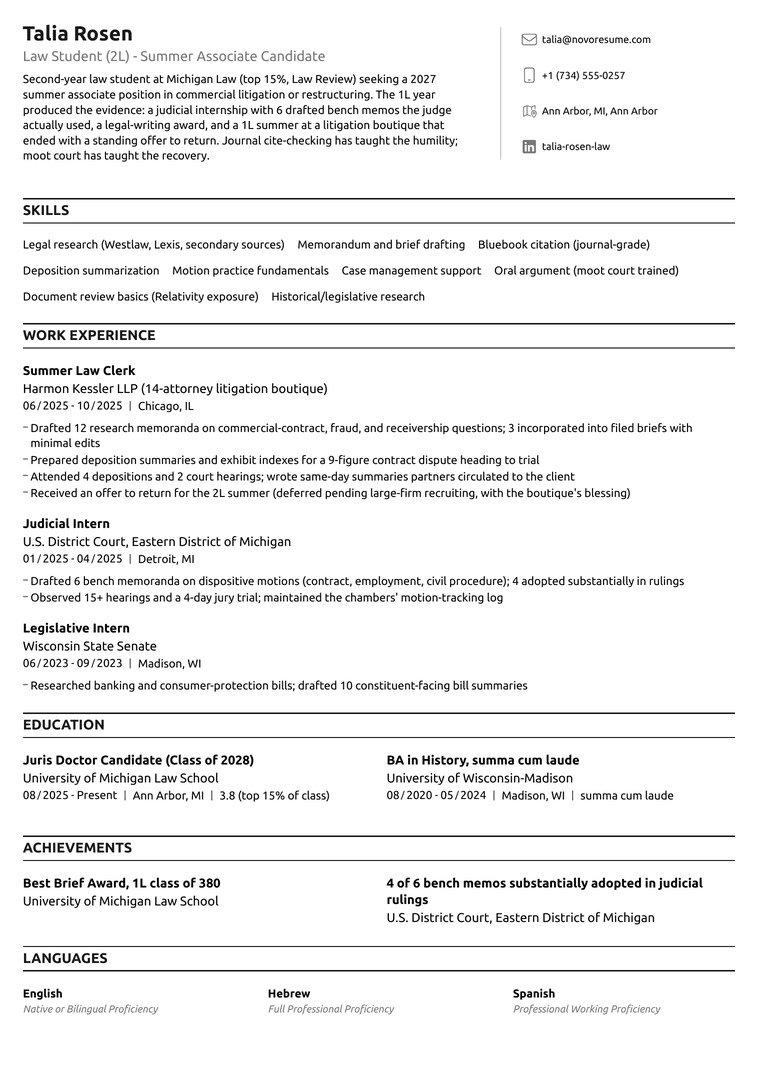
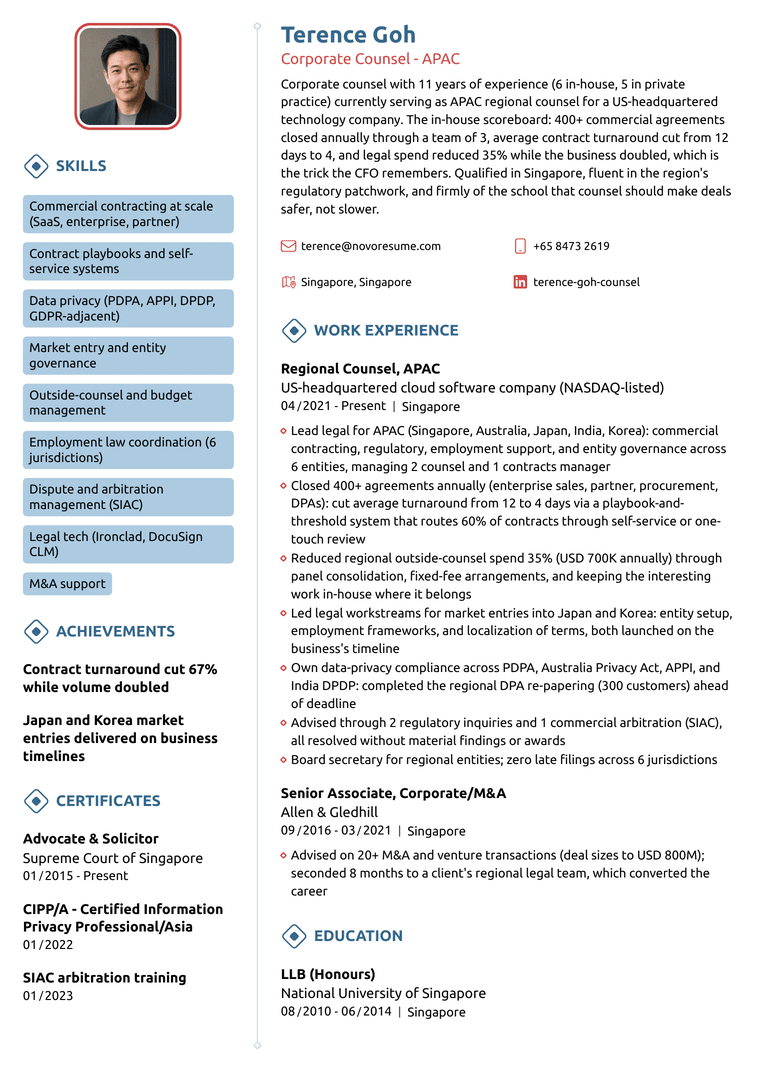
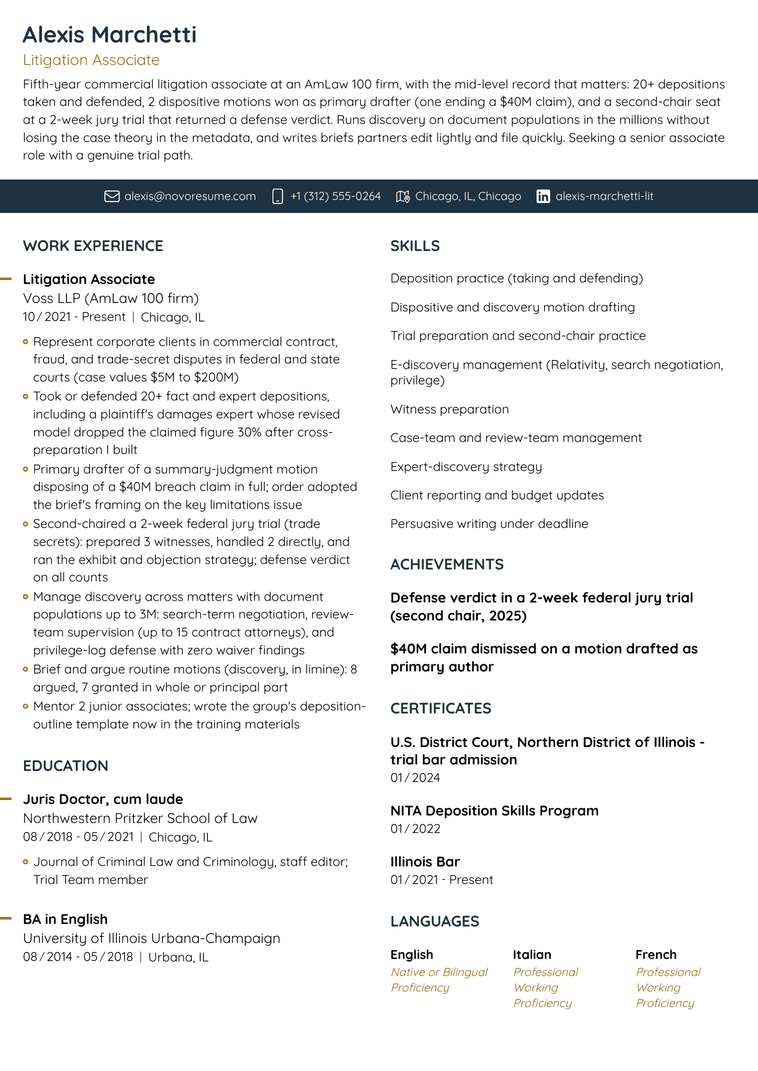
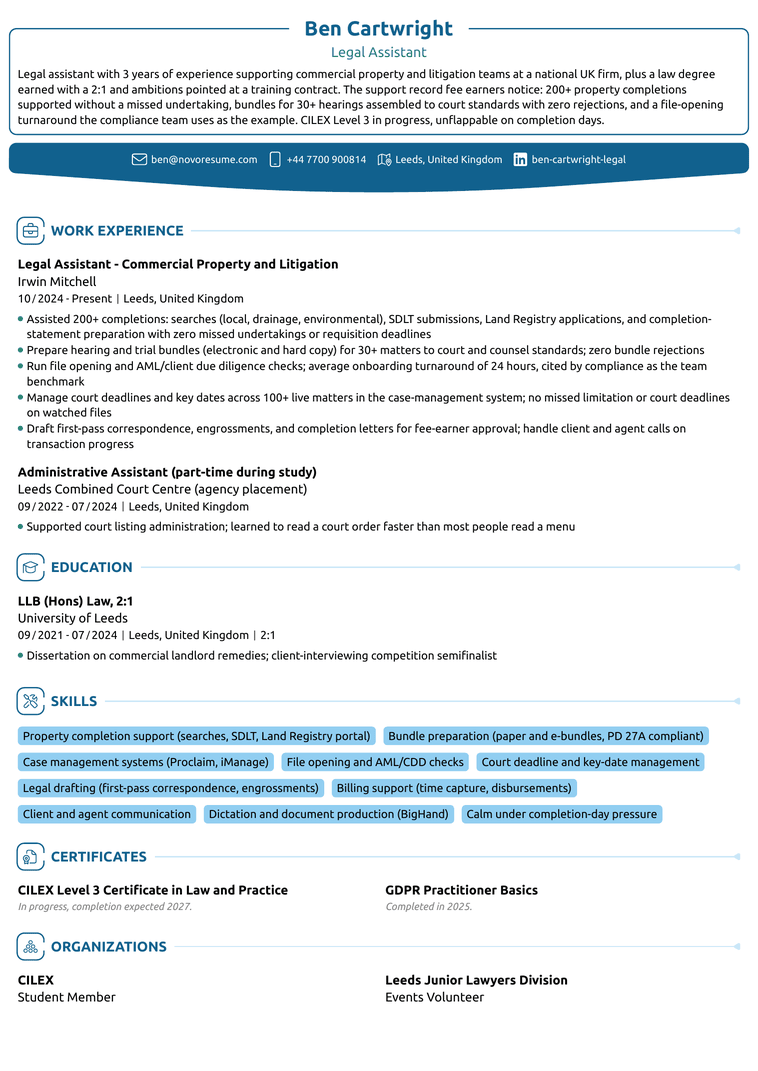
Start with format. Use a traditional template with a plain layout, a conventional font, minimal colour, and no graphics. One page for law students and early-career associates. Two pages for senior associates and partners. The header is restrained: name, address (city and state minimum, full address optional), phone, email, and bar admission status if you're a licensed attorney.
For law students, education sits at the top with school, expected JD, GPA if strong, and class rank if top quartile. Below that, list law review, journals, moot court, and other activities that signal academic engagement. For practising attorneys, education stays at the top early in the career, then moves below work experience after several years. Bar admissions appear in a dedicated section with state and year.
The work history covers legal experience with specific practice areas, transaction types, and case experience. Each role gets the firm or organisation, your title, location, and dates, followed by bullets covering matter types, transaction sizes, and your specific role. Senior candidates may add a "Notable Matters" section. Publications, speaking engagements, and bar association activity matter for senior attorneys.


