























How to Write a Designer CV
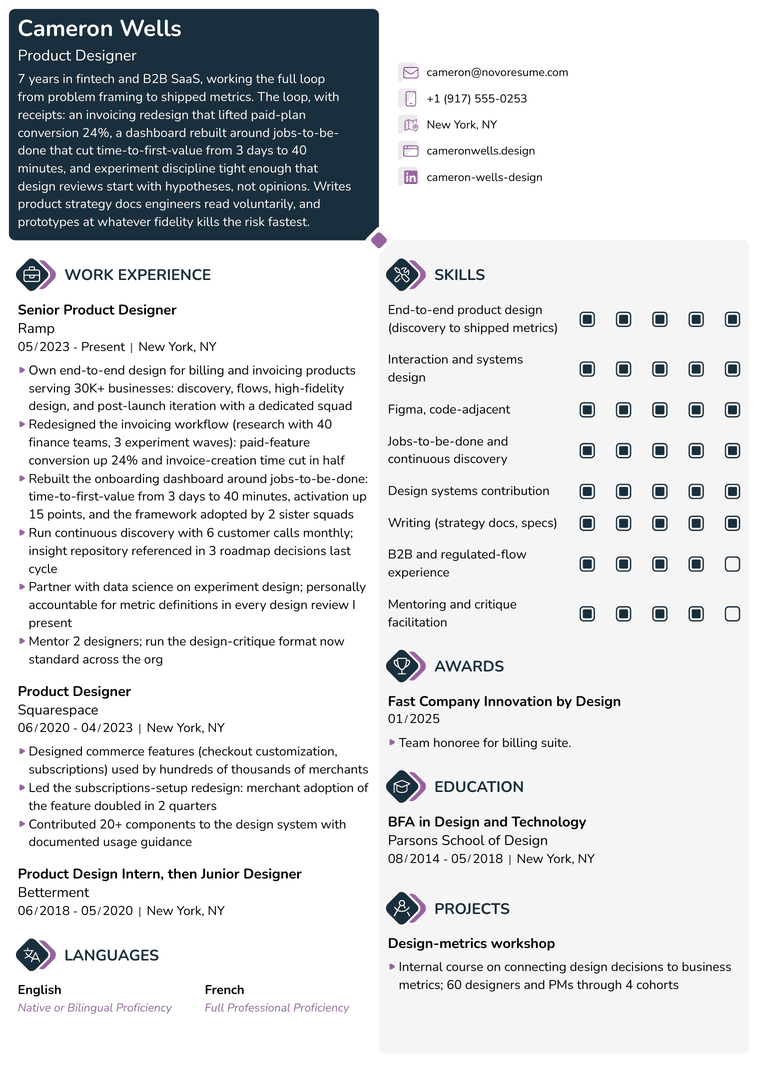
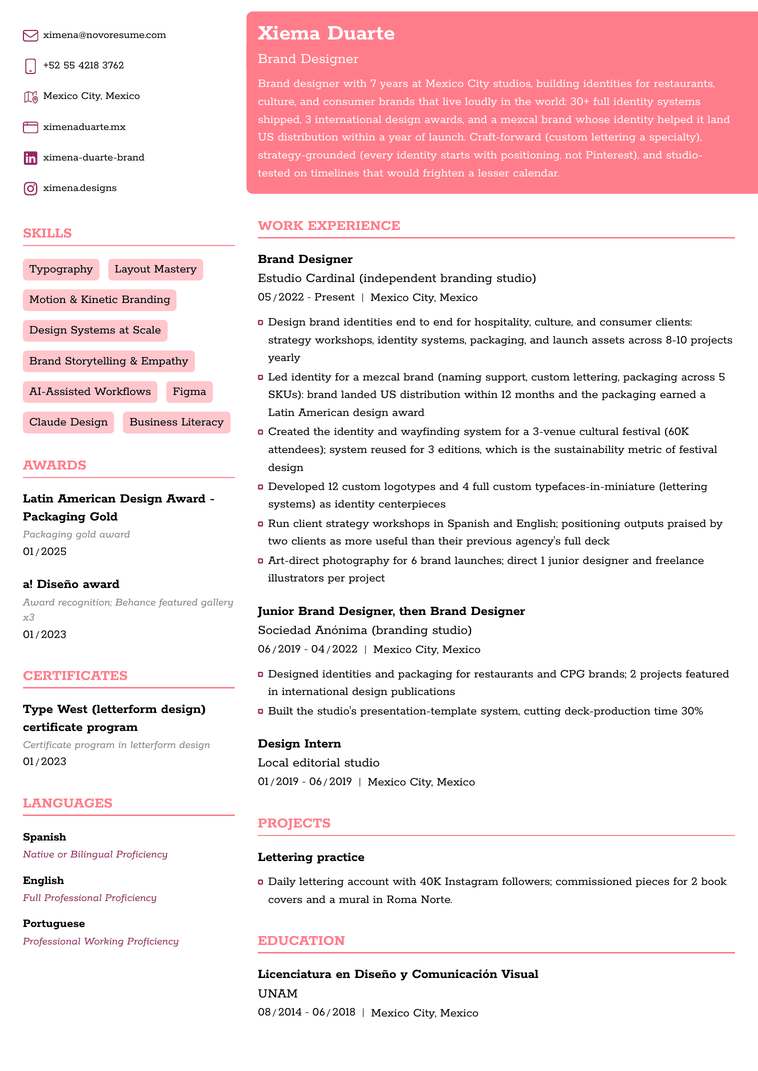
A designer CV is judged twice. First, on visual taste. The hiring manager sees the document before reading it and forms an impression about whether you can apply your craft to your own materials. Second, on the content: what you've shipped, what tools you use, and what you've learned. Both have to land.
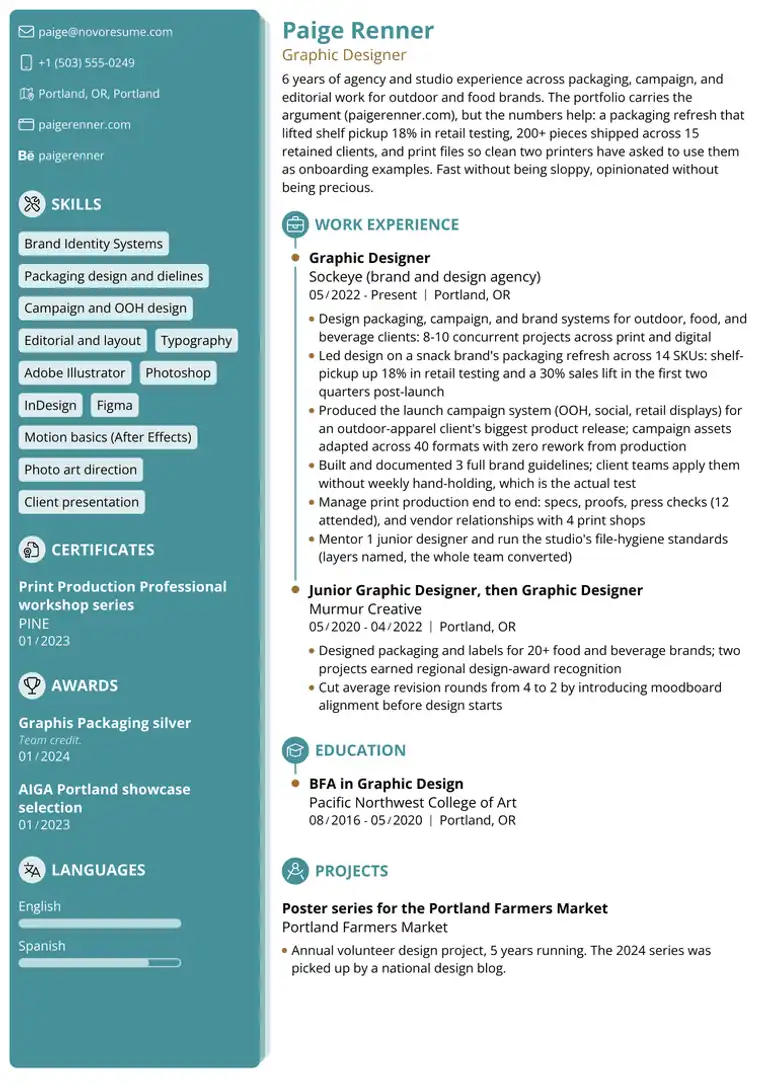
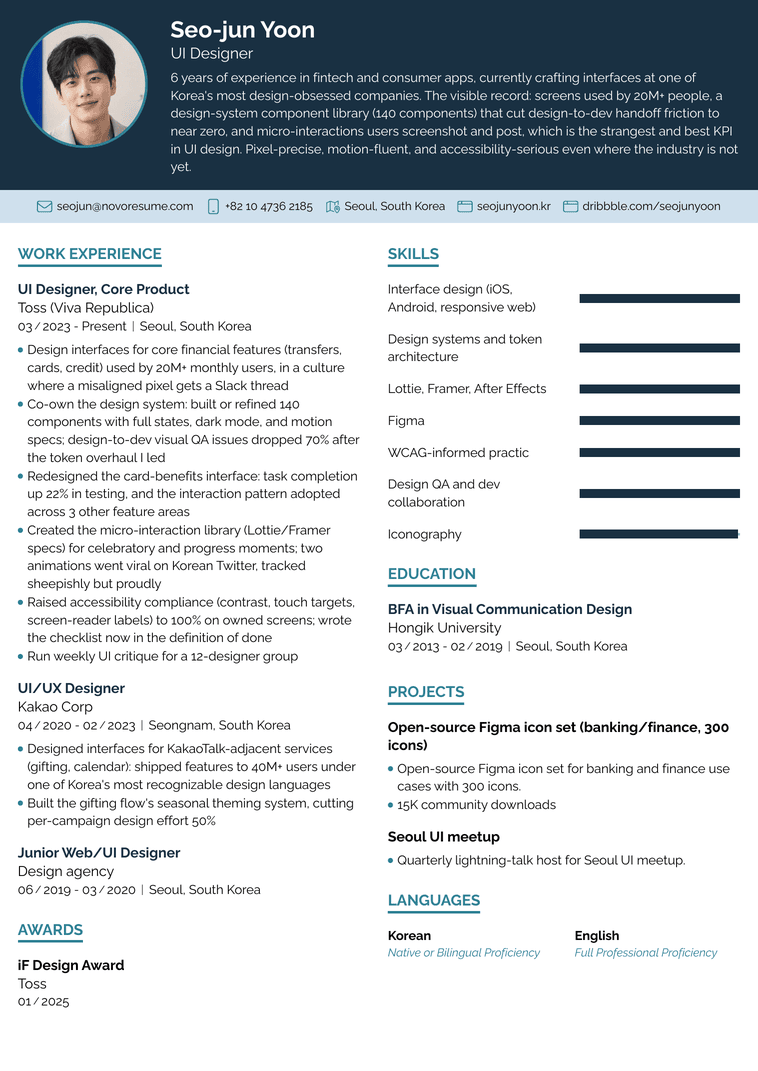
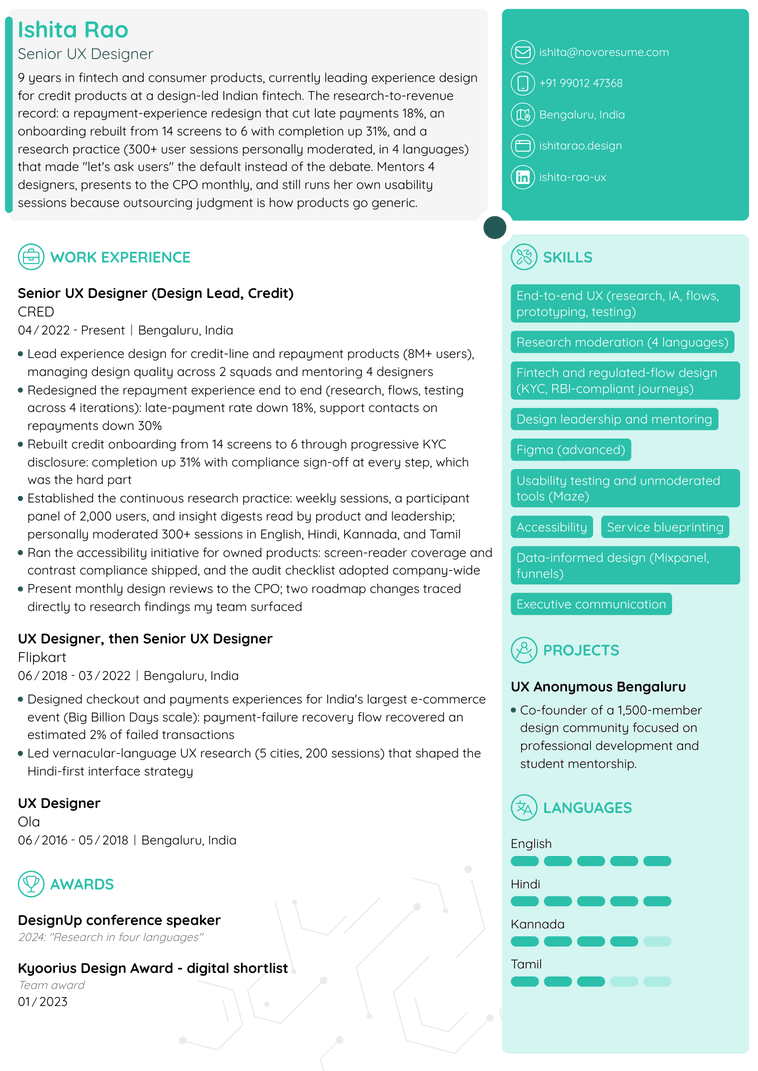
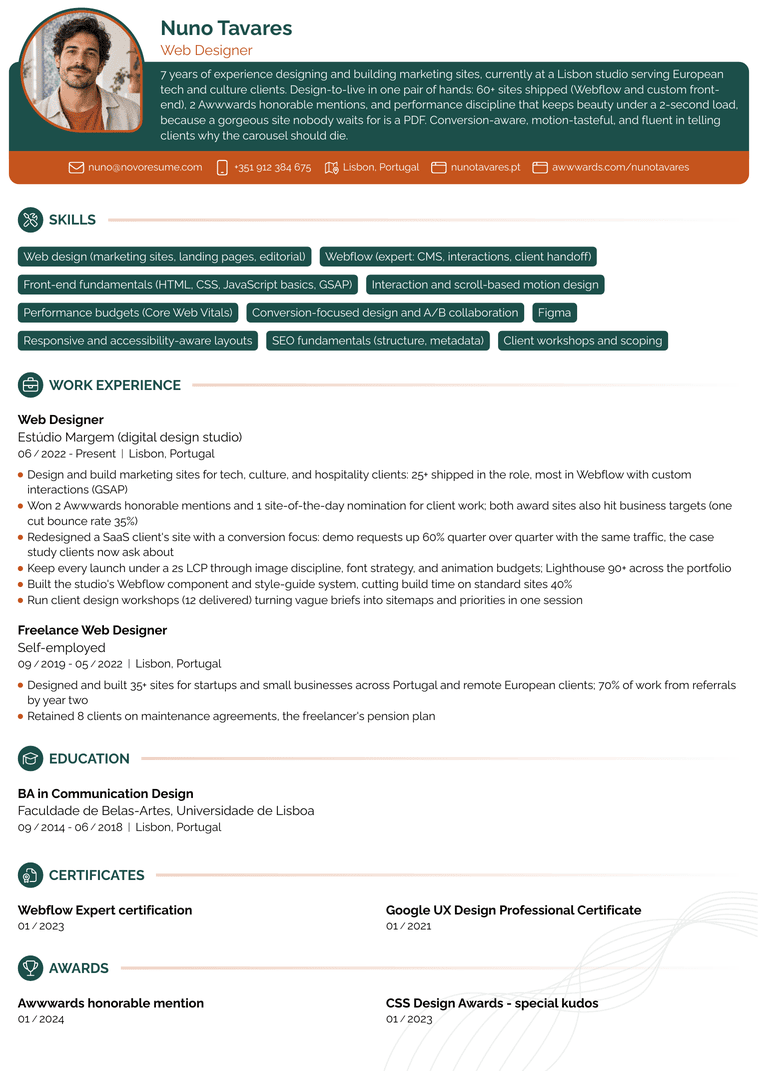
Start with format. Use a creative or modern template with strong typography pairings, restrained colour use (two colours typically, three at most), and clear visual hierarchy. The header includes name, contact, LinkedIn, and a prominent portfolio link. The portfolio is the credential; the CV earns the click.
The summary is short, often two to three sentences. State your speciality (UX, UI, product, graphic, motion), your years of experience, and your strongest specialisation. Below that, a tools section listing the design software you actually use (Figma, Sketch, Adobe Creative Suite, Framer, Principle, After Effects). Then the work history with bullets covering projects shipped, design impact, and cross-functional work with PM and engineering.
For junior designers, projects matter as much as work history. Include three to four projects with brief descriptions linking to portfolio case studies. For senior designers, work history scope (team size, products owned, design systems built) carries more weight.
One page for almost every designer. Two pages only at the senior director or VP level with substantial scope.


